- 장비
-
특수 크레인
-
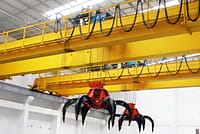
쓰레기 잡기 크레인
-
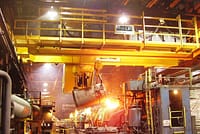
파운드리 오버 헤드 크레인
-
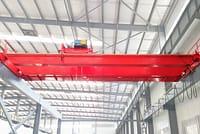
방폭형 오버 헤드 크레인
-
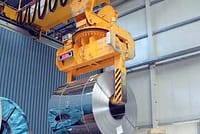
집게 오버 헤드 크레인
-
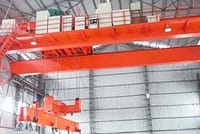
캐리어 빔이있는 오버 헤드 크레인
-
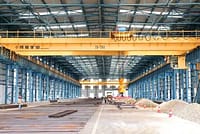
전자기 오버헤드 크레인
-
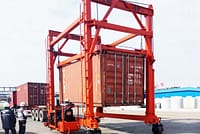
디젤 유압 스트래들 캐리어: 컨테이너 취급을 위한 유연한 운영 및 저렴한 솔루션
-
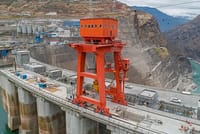
상부 스필웨이 게이트 갠트리 크레인: 댐 게이트 호이스트 및 수력 발전소 운영을 위한 안정적인 솔루션
-
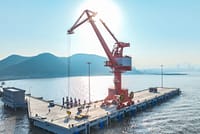
하버 포털 크레인: 효율적인 항만 처리를 위한 강력하고 지능적인 솔루션
-
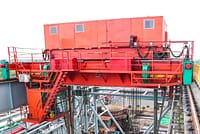
CDQ용 코크스 포트 크레인: 뛰어난 고강도 고온 코크스 취급
-
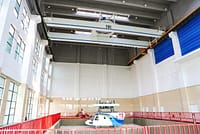
물 구조 시뮬레이션을 위한 응급 구조 전문 크레인: 생명 구조 훈련을 위해 설계됨
-
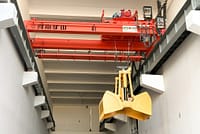
지능형 그랩 버킷 오버헤드 크레인: 강력하고 정밀하며 무인으로 작동하는 벌크 자재 처리 솔루션
-
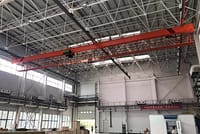
대형 스팬 및 하중 민감형 산업 건물용 맞춤형 다중 지점 현수식 오버헤드 크레인
-
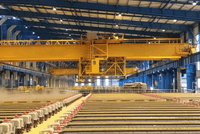
전해동 크레인: 효율적인 음극판 탱크 적재 및 이송에 특화
-
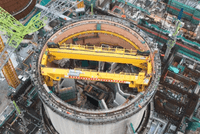
원자력 발전소용 극지 크레인: 다기능 리프팅 장비
-
-
산업 크레인
-
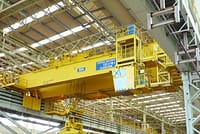
산업 크레인
-
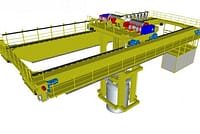
Tundish 크레인
-
슬래브 크레인
-
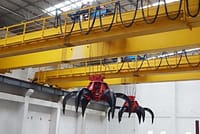
스크랩 크레인
-
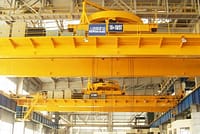
빌렛 크레인
-
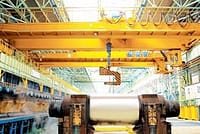
코일, 바 및 플레이트 핸들링 크레인
-
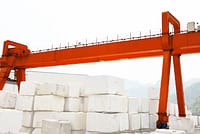
시멘트 및 프리 캐스트 크레인
-
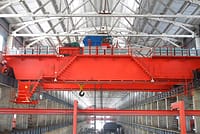
발전소 크레인
-
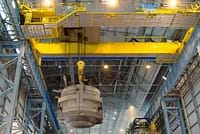
래들 크레인
-
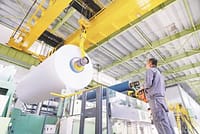
제지 산업 크레인
-
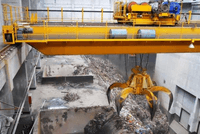
폐기물 에너지화 크레인 및 바이오매스 크레인
-
항공우주용 맞춤형 오버헤드 크레인: 높은 정밀도, 효율성, 안전성 및 신뢰성
-
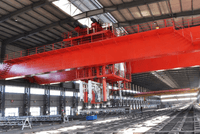
양극 베이킹 다기능 크레인: 다재다능하고 고온에 강하며 전기분해 알루미늄 산업에 꼭 필요한 스마트 제어 기능
-
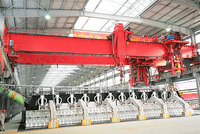
알루미늄 전해용 다기능 크레인: 모든 알루미늄 전해 공정을 충족하고 공장 효율성을 향상시킵니다.
-
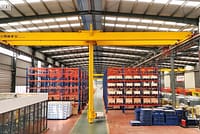
ASRS용 창고 스태커 크레인: 고효율, 신뢰성, 완전 자동화된 보관 시스템
-
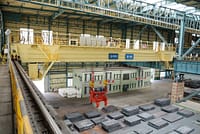
슬래브 취급용 오버헤드 크레인: 연속 주조 및 슬래브 야드용 야금 등급 크레인
-
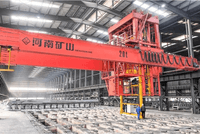
양극 탄소 블록 적재 크레인: 6단 적재, 탄소 공장의 효율적인 이송을 위한 리프팅 솔루션
-
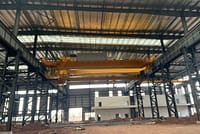
열처리용 담금질 크레인: 공정 중심형 오버헤드 크레인 솔루션
-
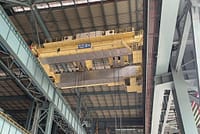
야금 원료 공급 작업에 적합한 안전하고 안정적인 고철 장입용 오버헤드 크레인
-
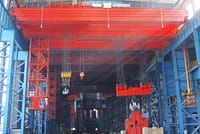
단조용 오버헤드 크레인: 고하중 단조 작업장을 위한 신뢰할 수 있는 리프팅 장비
-
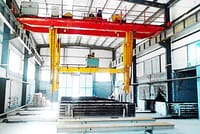
AAC 생산 라인용 금형 핸들링 크레인: 신뢰할 수 있는 엔지니어링 고정 위치 리프팅 솔루션
-
-
호이스트 & 윈치 트롤리
-
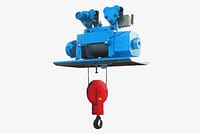
전기 와이어 로프 호이스트 주조
-
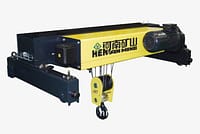
유럽 모델 전기 호이스트
-
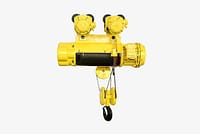
방폭형 전기 호이스트
-
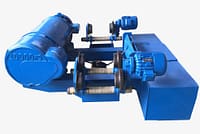
낮은 헤드 룸 전기 호이스트
-
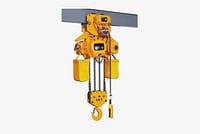
전기 체인 호이스트
-
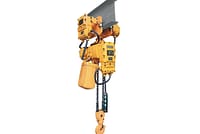
위험 구역용 2가지 유형의 폭발 방지 전기 체인 호이스트: 가스 및 먼지 보호
-
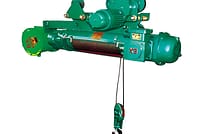
산업 안전을 위한 2가지 유형의 방폭 전기 와이어 로프 호이스트: 신뢰할 수 있는 가스 및 방진 솔루션
-
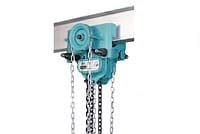
정밀 리프팅을 위한 수동 호이스트: 무동력 작동을 위한 검증된 3가지 유형 살펴보기
-
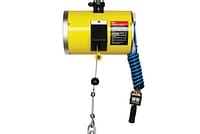
공기압 호이스트: 정밀성, 안전성, 혹독한 환경을 위한 4가지 특수 설계
-
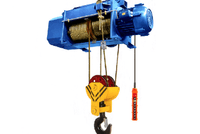
HC형 전동 호이스트: 공장 중량물 인양용 고하중 와이어 로프 호이스트
-
- 크레인 스프레더
- 크레인 부품
- 이동 카트

.png?w=200&h=134)

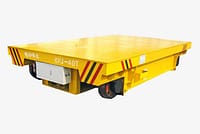
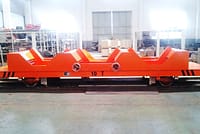
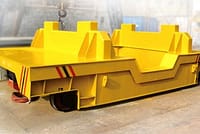
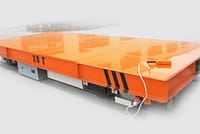
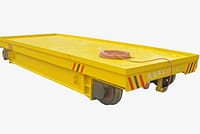
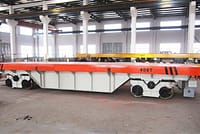
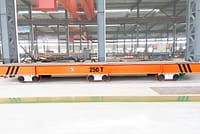
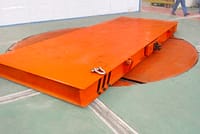
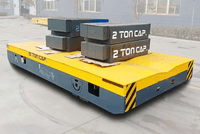
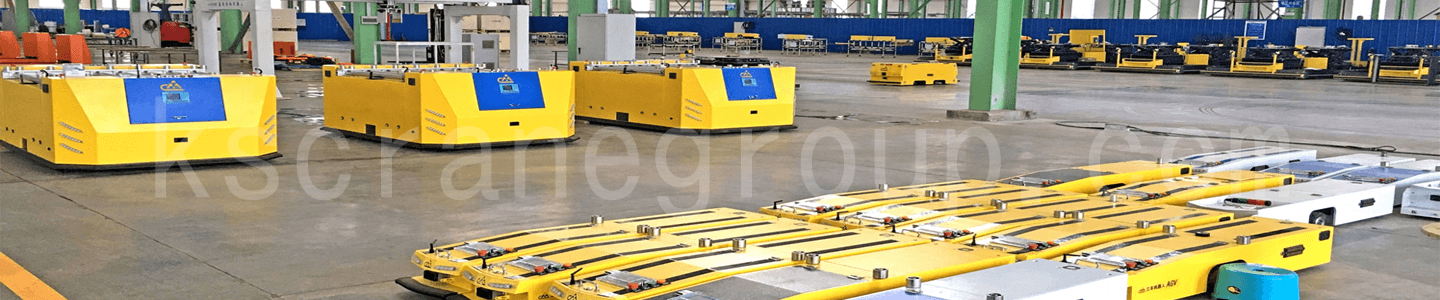
AGV Transfer Carts: The Efficient Choice for Automated Intelligent Material Handling
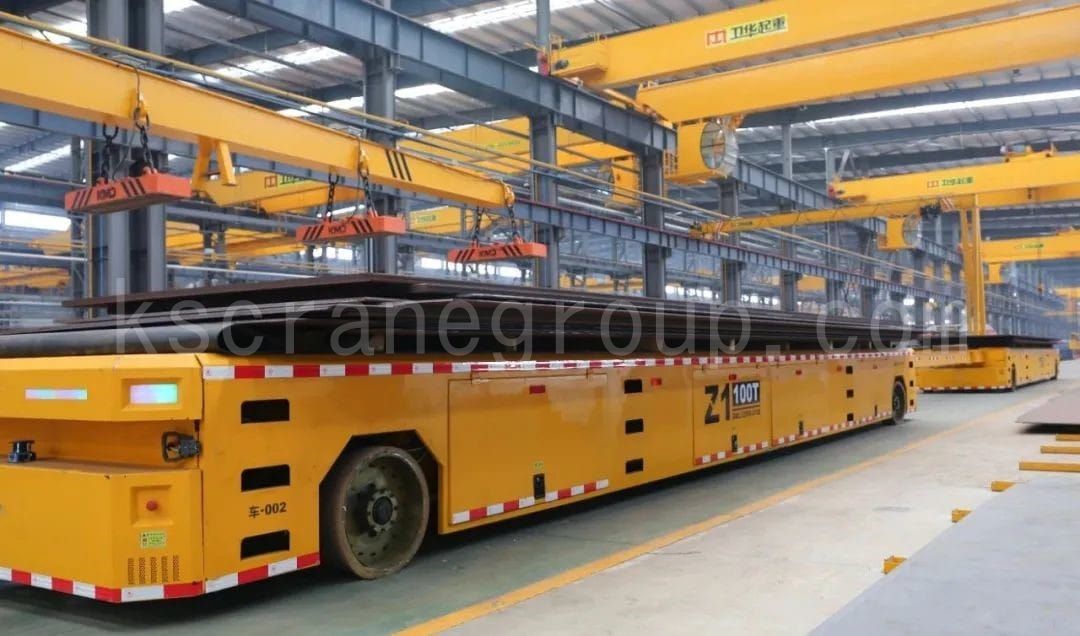
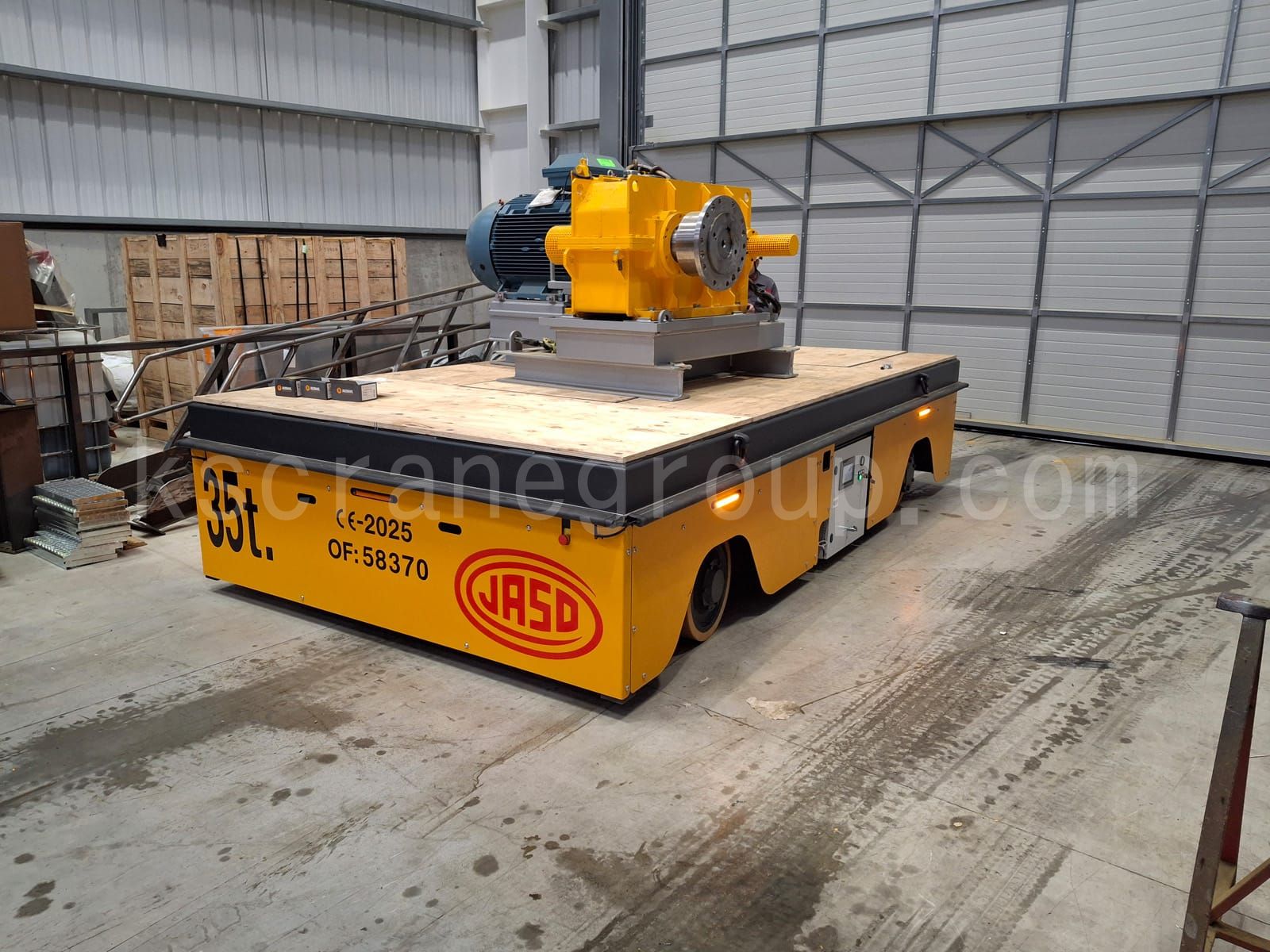
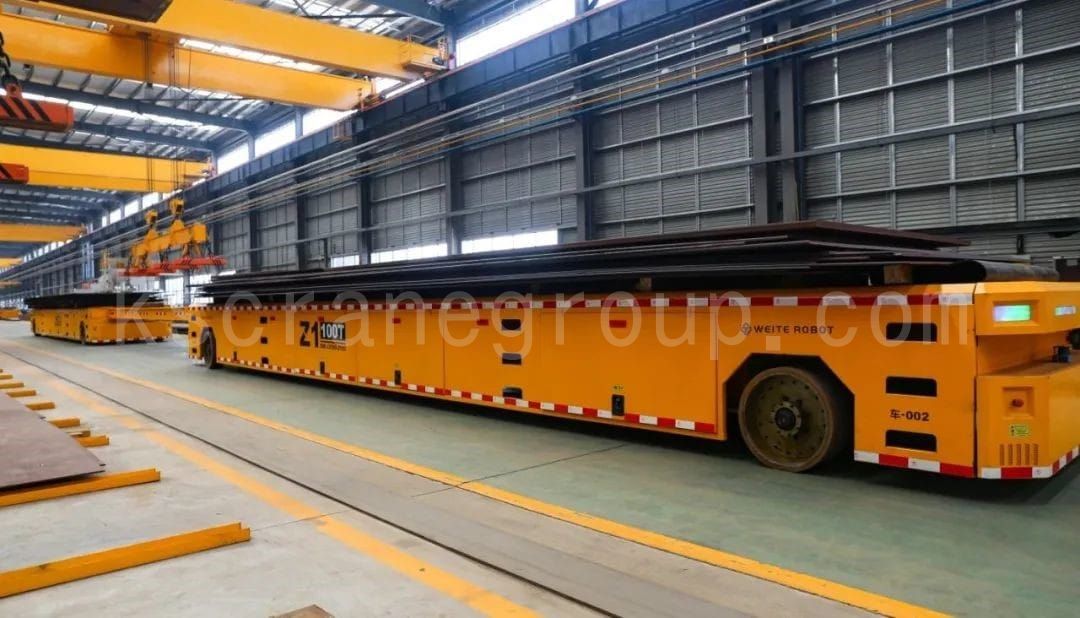
AGV Transfer Carts stands for Automated Guided Vehicle. It is a driverless transport unit powered by batteries that follows predefined paths using guidance systems such as magnetic strips, vision, laser, or QR codes, equipped with safety protection and transfer mechanisms. The system consists of the AGV itself, a control computer, navigation equipment, and charging devices, enabling functions like route planning, task execution, and automatic recharging. With broad application scenarios, AGVs can efficiently, accurately, and flexibly handle material transportation tasks in industries such as manufacturing, pharmaceuticals, logistics, and various heavy industries.
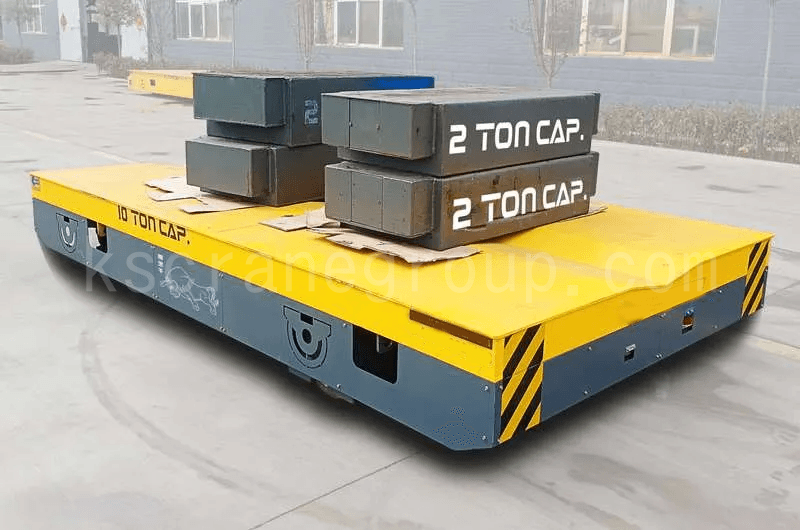
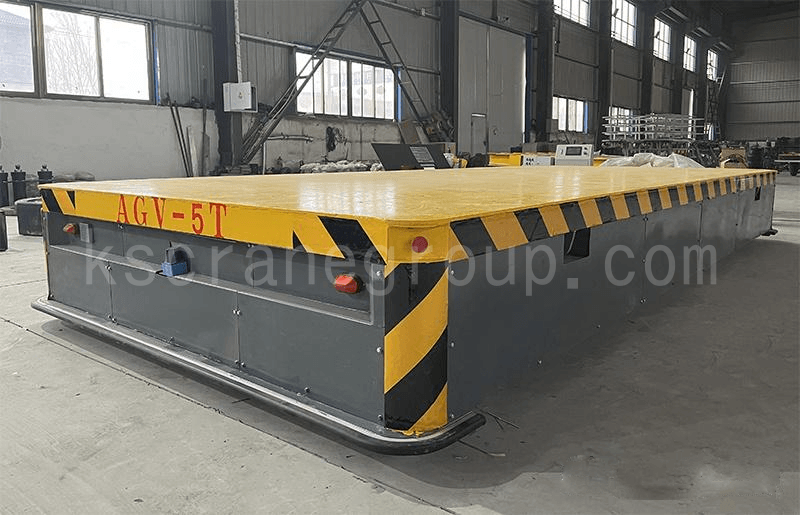
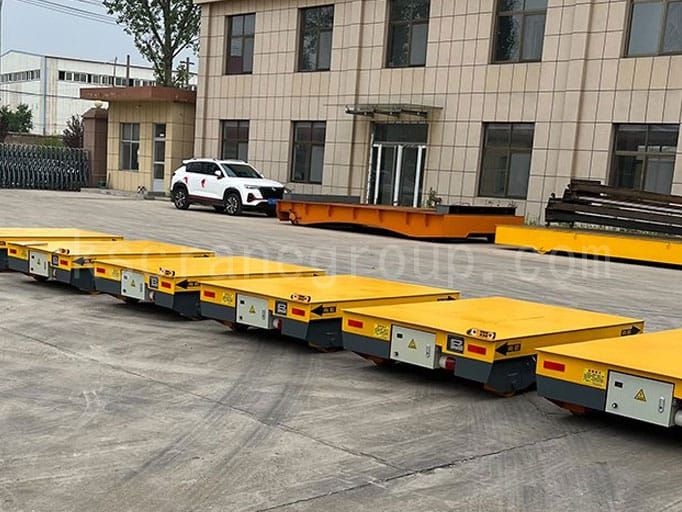
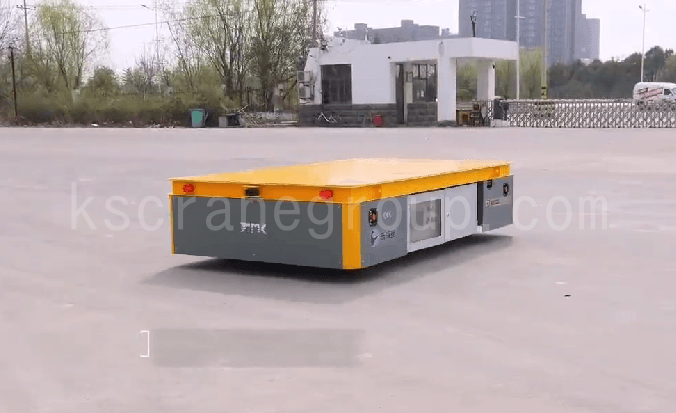
Core Features and Advantages of AGV Transfer Carts
• Automatic Endurance: Self-request charging when power is low, supports induction power supply without cables, enabling stable 24/7 continuous operation.
• High Reliability: Controllable path and speed, precise positioning, improving material transport efficiency.
• Intelligent Management: Supports digital control, synchronizes transport progress via data panels, simplifying logistics management.Safety Protection: Equipped with collision avoidance, warning alerts, emergency stop, and fault reporting functions to ensure operational safety.
• High Flexibility: Dual-drive system supports multi-directional movement, adaptable to complex operational scenarios.
• Heavy-Load Adaptability: Customizable for large tonnage, built with thickened Q235 steel for heavy-load transportation needs.
Technical Specifications of AGV Transfer Carts
| 제품 유형 | AGV-5T | AGV-10T | AGV-15T | AGV-20T | AGV-30T | AGV-40T | AGV-50T | AGV-80T | AGV-100T | AGV-300T | AGV-500T |
| Rated Load Capacity(t) | 5 | 10 | 15 | 20 | 30 | 40 | 50 | 80 | 100 | 300 | 500 |
| Platform Length(mm) | 3000 | 3600 | 4000 | 4500 | 5000 | 5500 | 6000 | 6500 | 7000 | 7500 | 8000 |
| Platform Width (mm) | 2000 | 2000 | 2000 | 2200 | 2200 | 2300 | 2300 | 2500 | 2700 | 3000 | 3000 |
| Platform Height(mm) | 550 | 650 | 700 | 720 | 800 | 900 | 1000 | 1100 | 1250 | 1500 | 1500 |
| Platform Steel Plate Thickness(mm) | 6 | 6 | 8 | 8 | 10 | 10 | 12 | 14 | 16 | 22 | 25 |
| Wheelbase(mm) | 1800 | 1800 | 2000 | 2500 | 3000 | 3500 | 4000 | 4500 | 5000 | 5500 | 6000 |
| Track Width(mm) | 1500 | – | – | 1700 | – | – | 1900 | – | – | 2100 | – |
| 휠 지름 (mm) | 300 | 350 | 350 | 400 | 450 | 580 | 580 | 600 | – | – | – |
| Turning Radius(mm) | 2501 | 3101 | 3401 | 3901 | 3901 | 3901 | 3901 | – | – | – | – |
| Battery Capacity(kW) | 250/24 | 330/24 | 400/24 | 440/24 | 250/48 | 330/48 | 440/48 | 250/72 | 330/72 | – | 440/72 |
| Motor Power(kW) | 1.5 | 2.2 | 3 | 4 | 5.5 | 7.5 | 8 | 10 | 12 | 15 | 20 |
| Intelligent Charger(A) | 30A | 35A | 35A | 50A | 50A | 60A | 80A | – | – | – |
AGV Applications: Case Studies from Multiple Industries
AGV Transfer Carts offer extensive application scenarios, playing crucial roles across various stages such as machining, warehousing, assembly, and manufacturing. In fact, they have become one of the most iconic features of modern smart factories. Automated guided vehicles are widely deployed in the automotive industry, home appliance and electronics manufacturing, computer production, warehousing and logistics, and even logistics centers for convenience stores.
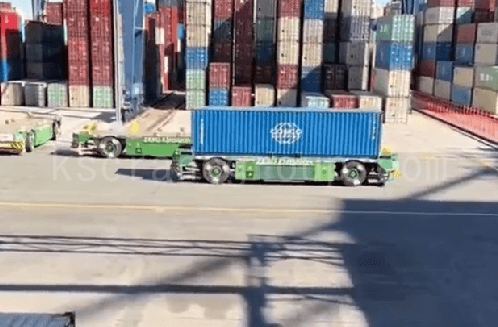
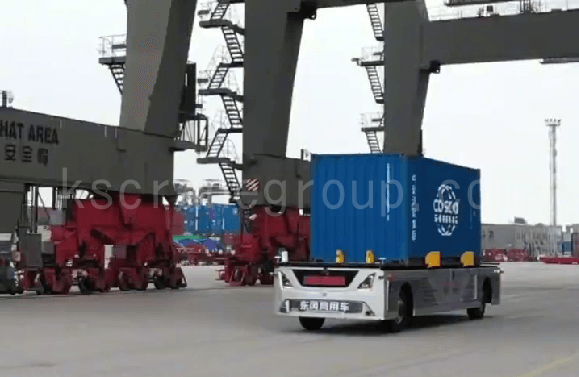
Unmanned Container Transport Solution for Ports
In the scenario of port container transportation, AGVs are primarily responsible for container transfer tasks. After large port container cranes load containers from ships onto the AGVs, the AGVs rely on an intelligent dispatch system to autonomously plan their routes and automatically transport the containers to designated yards for stacking. This achieves unmanned operations in the port container loading and unloading process, enhances the turnover efficiency of port containers, and ensures the safety and continuity of the operations.
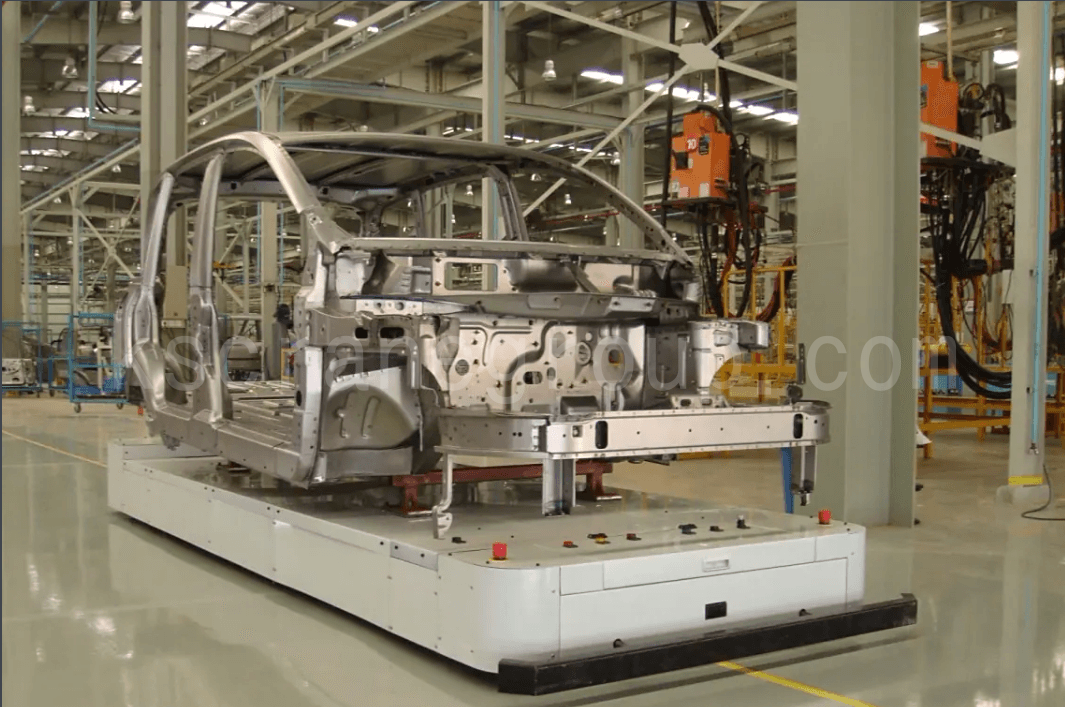
Automotive Manufacturing: Transporting Vehicle Frames
In automotive manufacturing workshops, AGVs carry vehicle bodies, enabling precise and automated transportation between different production stations such as welding and final assembly. This approach replaces traditional manual or forklift handling methods, ensuring strict synchronization with the production line cycle and maintaining operational continuity. Additionally, AGVs can collaborate with automated equipment like welding robots to support flexible production lines capable of handling multiple vehicle models simultaneously. This not only enhances production efficiency and positioning accuracy but also reduces safety risks associated with manual handling. AGVs have thus become critical equipment for achieving automated and intelligent workshop logistics in smart automotive manufacturing.
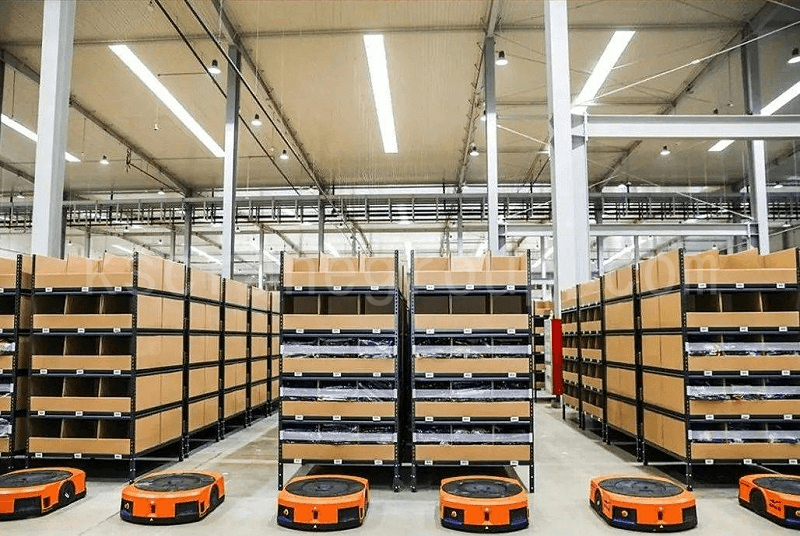
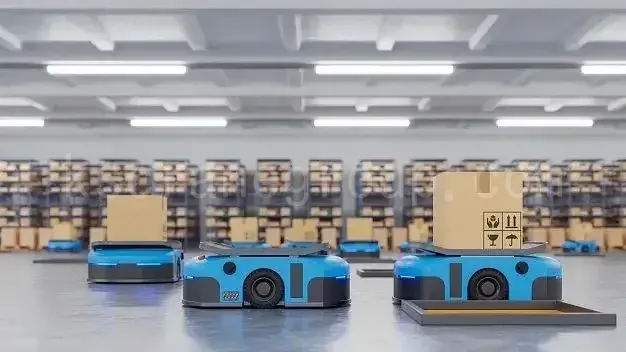
Warehousing & Logistics: Intelligent Transport and Efficient Flow
In smart warehousing systems, AGVs are responsible for the automated handling of goods (such as cartons and pallets), achieving precise transfer from storage areas to sorting zones, outbound areas, and inbound areas. Utilizing navigation technologies like lasers or QR codes, AGVs autonomously plan optimal routes based on system commands, enable automatic obstacle avoidance, and support multi-vehicle collaborative operations. This significantly improves handling efficiency and sorting speed in warehousing logistics while reducing labor costs and goods handling losses. AGVs have become essential equipment for realizing unmanned and highly efficient logistics operations in intelligent warehouses.
Steel Industry: Automated Plate Transport Solution
In slab handling operations within the steel industry, AGVs are gradually replacing traditional heavy trucks, rail cars, and manual transport equipment. They can coordinate with workshop overhead cranes to complete the entire process of slab feeding, inter-station transfer, and unloading. Guided by an intelligent dispatch system, AGVs autonomously navigate to designated process stations without manual intervention, meeting the demands of heavy-duty workshops for large-tonnage material transport while achieving efficiency improvements through intelligent multi-vehicle parallel scheduling.
Comparison of AGV Navigation Technologies
| Category | Laser Navigation | Magnetic / Magnetic Tape | QR Code Navigation | Vision Navigation | Infrared Navigation | Ultrasonic Navigation |
| Navigation Principle | Laser scanner maps environment for positioning | Detects magnetic signals embedded in floor | Reads QR codes on the floor for positioning | Camera captures features with SLAM algorithms | Infrared signal guidance and positioning | Ultrasonic sensing for positioning or obstacle detection |
| 주요 특징 | High accuracy, high flexibility, no floor modification | Mature technology, stable, fixed routes | High positioning accuracy, simple deployment | No ground markers required | Simple structure, low cost | Mainly for auxiliary positioning or detection |
| Influencing Factors | Affected by reflections and obstructions | Magnet/tape damage, displacement, strong magnetic interference | QR code pollution, obstruction, floor flatness | Lighting changes, insufficient environmental features | Strong light interference, signal blockage | Sound-absorbing materials, multiple obstacles |
| 유지 | Keep reflectors clean and accurately positioned | Magnetic strips must not be damaged or shifted | Keep QR codes and scanner lenses clean | Clean camera lens, maintain stable environment features | Clean emitters/receivers, avoid strong light | Clean sensors, avoid obstructions |
| 일반적인 응용 프로그램 | Indoor/outdoor, medium to large warehouses | Fixed-route cyclic transport | High-precision indoor logistics | Flexible production, smart factories | Short-distance simple routes | Short-distance, low-accuracy indoor transport |
| Route Flexibility | High, software-based adjustment | Low, requires physical modification | Medium, requires re-laying QR codes | High, autonomous path planning | Low, fixed routes | Low, path dependent on setup |
AGV navigation is not limited to a single guidance method. A single AGV can operate using a combination of different navigation technologies based on actual working conditions.
Hybrid navigation solutions effectively compensate for the limitations of individual methods in terms of environmental adaptability, positioning accuracy, and route flexibility, enabling AGVs to meet diverse operational requirements.
For example, in high-safety applications such as explosive material transportation, AGVs can adopt a combined laser navigation and infrared guidance system to enhance positioning accuracy, improve transport efficiency, and reduce overall operating costs.
In addition, the combination of laser navigation and QR code landmarks enables precise and stable indoor positioning even in environments with limited features, expanding the range of AGV application scenarios.

연락하기
- 제품에 대한 무료 및 빠른 견적.
- 제품 카탈로그를 제공하십시오.
- 우리 회사의 지역 크레인 프로젝트.
- 에이전트가 되어 커미션을 받으세요.
- 질문이 있으시면 저희에게 연락하십시오.


