HjemBlogSådan vælger du belægning til traverskran: ISO 12944 C3-C5-M sammenligning og accept
Sådan vælger du belægning til traverskran: ISO 12944 C3-C5-M sammenligning og accept
Dato: 10. juni 2026
Indholdsfortegnelse
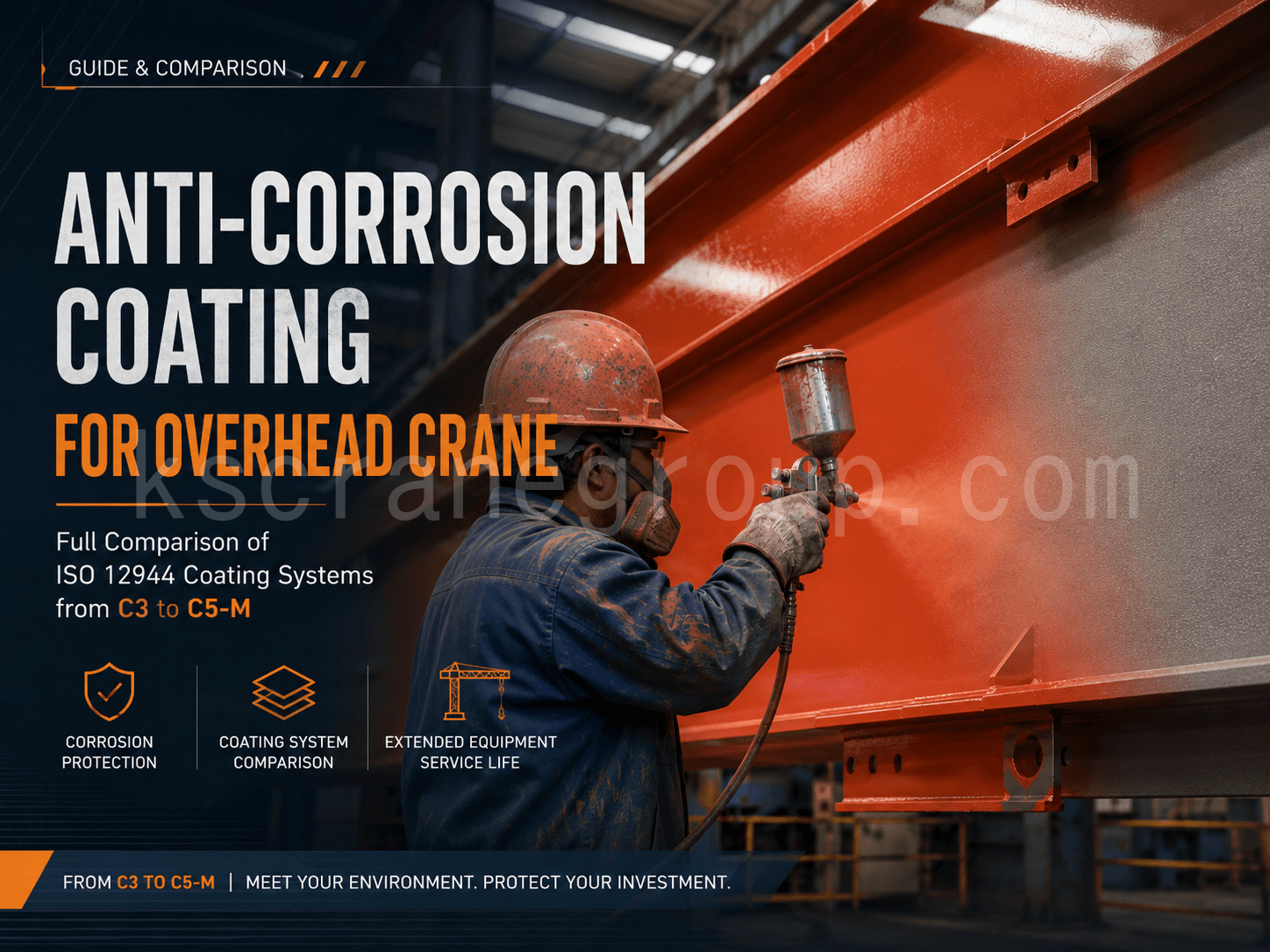
Jeg har set dette alt for mange gange: en traverskran, der har været i drift i mindre end fem år, begynder at vise rust langs hovedbjælkens svejsesømme, belægningsblære på den nederste flange på endevognen, og store malingsskaller skaller af omkring bolthuller. Når sådanne problemer opstår, henvender kunderne sig altid til os for at finde ud af, hvad der gik galt med belægningen til en traverskran.
Undersøgelsen viste, at kranen havde alle de rigtige parametre – korrekt kapacitet, spændvidde og driftsklasse. Det eneste problem var belægningen. Den blev påført som en "standard industrimaling" med et C3-system og en samlet tørfilmtykkelse (DFT) på 160 μm. Men det faktiske installationsmiljø var et kystkraftværk – tydeligvis C4.
Malingen var ikke forkert. Udvalget var forkert.
Denne artikel er her for at hjælpe dig med at undgå det. Vi vil ikke diskutere malingmærker – det er producentens opgave. Vi vil tale om, hvordan du bestemmer den nødvendige belægningsgrad, og hvordan du verificerer, om producentens forslag er korrekt.
Før du vælger en belægning til din traverskran, skal du vide, hvad din kran står over for.
Udgangspunktet for valg af belægning er ikke malingen; det er miljøet.
ISO 12944-2 definerer seks korrosivitetskategorier for stålkonstruktioner. For kraner falder 90% af tilfældene mellem C2 og C4. Efter min erfaring er et miljø, man groft vurderer som "generelt", sandsynligvis mindst C3.
Kategori
Miljøbeskrivelse
Typisk placering
Bemærkninger
C1
Opvarmede bygninger med ren luft
Indendørs
Næsten ingen (laboratorier, elektronikværksteder)
C2
Lavforurenende landområder, let kondensering
Primært indendørs
Monteringsværksteder, tørlagre
C3
Bymæssig industriel atmosfære, middel luftfugtighed, nogle SO₂-udledninger
Indendørs/udendørs
De fleste maskinværksteder, almindelige fabrikker
C4
Kystområder, nær kemiske fabrikker, høj luftfugtighed, salttåge
"Indendørs = lav korrosion" er en almindelig misforståelse. Skærevæskedampe i maskinværksteder indeholder svovl og klor. I dårligt ventilerede værksteder kan korrosionshastigheden på stålkonstruktioner være højere end udendørs. Alkaliståge under betonhærdning accelererer stålkorrosion – de første dele, der ruster i en ny fabrik, er ofte kranskinneklemmerne.
Hvor langt fra havet betragtes det som "kystnært"? ISO angiver ikke en præcis afstand. Vores erfaring: Inden for 5 km fra kystlinjen, især på vindsiden (monsunretningen), skal det behandles som C4. Passatvinde og havsalt-aerosoler kan bevæge sig mere end 10 km ind i landet.
Bestem først korrosivitetskategorien, og tal derefter om belægningssystemer. Spring dette trin over, og du vil gå galt i byen uanset hvilken maling du vælger senere.
Overfladebehandling—60% af belægningens levetid afhænger af dette
Dette er den sætning, jeg allermest ønsker, at du husker fra denne artikel: En belægning sidder ikke "fast" på stålpladen; den er låst fast af mekanisk ankerkraft.
Derfor er overfladebehandling langt vigtigere end malingsmærket. Et projekt, der bruger importeret maling af høj kvalitet med dårlig overfladebehandling, vil have en kortere rustbeskyttelseslevetid end et projekt, der bruger almindelig husholdningsepoxy, men hvor overfladebehandlingen er udført korrekt.
Sådan vælger du en sandblæsningsgrad
ISO 8501-1 definerer fire kvaliteter. Grundlinjen for krankonstruktioner i stål er Sa2.5—Blæserengøring af næsten hvidt metal.
Grad
Beskrivelse
Kvalitet
Henstilling
Sa1
Let fejende stød
Fjerner kun løs rust og gammel maling
❌ Ikke relevant
Sa2
Kommerciel eksplosion
Fjerner det meste rust og glødeskaller; rester tilladt på maks. 1/3 af overfladen
❌ Anbefales ikke
Sa2.5
Næsten-hvid eksplosion
≥95% af overfladen viser bart metal; kun lette skygger er tilbage
✅ Minimumsstandard for kraner
Sa3
Hvidmetaleksplosion
100% bart metal, ensartet sølvhvidt udseende
Kun til C5-M eller immersionsmiljøer
Forskellen mellem Sa2.5 og Sa2 er ikke bare "renlighed"; det er ankermønster—den mikroskopiske ruhed.
Primeren trænger ind i ståloverfladens mikronhøje toppe og dale. Når den tørrer, er den låst fast som en nøgle i en lås. Uden dette forankringsmønster er malingsfilmen kun afhængig af molekylære kræfter for at klæbe til stålet. En temperaturændring eller vibrationer i stålpladen kan bryde denne binding. Håndslibning (St2/St3) kan ikke skabe dette ankermønster—en stålbørste kan få overfladen til at se skinnende ud, men den skaber faktisk en poleret, glat overflade, som maling ikke kan gribe effektivt fast i.
Hvad er den optimale ruhedsdybde?
Den optimale dybde af ankermønsteret er Rz 40-70μmFor lav (<40 μm), primeren vil ikke hæfte. For høj (>70 μm), "toppene" i ankermønsteret kan stikke ud gennem primerlaget og blive udgangspunkt for korrosion.
I praksis opnår stålfabrikker, der bruger vinkelformet stålkorn (Grit) til blæsning, typisk en ruhed i Rz-området 50-65 μm. Brug af runde stålkugler (Shot) resulterer i lavere ruhed, så en vis andel korn blandes normalt i for at justere den.
Vores fabriks praksis: Primeren skal påføres inden for 4 timer efter sandblæsning. Efter 4 timer begynder det frisk eksponerede, bare stål at oxidere – der dannes et usynligt, meget tyndt oxidlag, som allerede påvirker vedhæftningen.
Kernesammenligning: Sådan vælger du en ISO 12944-belægningsordning til miljøer fra C3 til C5-M til din traverskran
Dette er den mest kritiske del. Først skal du afklare en almindelig misforståelse: ISO 12944-5 foreskriver ikke et enkelt "korrekt svar" for hvert korrosivt miljø. Faktisk oplister standarden flere referencebelægningssystemer for hver miljøklasse og holdbarhedskrav – tænk på det som en valideret "menu af muligheder", hver med sin egen formelle kode (f.eks. A3.08, A3.11, A4.14). Skemaerne nedenfor er de mest almindeligt anvendte og omkostningseffektive kombinationer, valgt fra ISO-menuen baseret på praktiske projekterfaringer.
Når du gennemgår et tilbud, anbefaler vi at stille producenten to spørgsmål: "Hvilket ISO 12944-5-belægningsskema refererer du til? Hvorfor valgte du dette skema til mine arbejdsforhold?" En god producent vil forklare deres begrundelse; hvis de ikke kan det, påføres belægningen til traverskraner sandsynligvis "efter følelse".
C3 Miljø (Generel Industri) – Standarden for de fleste indendørs traverskraner
C3 er den tilstand, man ser i 90% på maskinværksteder, samlebånd og standardlagre. ISO 12944-5 oplister adskillige valgfrie belægningssystemer til C3-miljøer, hvor de to nedenfor er de mest almindelige i praksis:
Ordningskode
Lag
Malingstype
Tørfilmtykkelse (DFT)
Antal lag
Total DFT (Minimum)
Holdbarhed
A3.08
Grunder
Epoxyzinkfosfatprimer
80 μm
1
≥160μm
Medium (5-15 år)
Toplak
Alifatisk polyuretan topcoat
40 μm
2
A3.11
Grunder
Epoxy zinkrig primer
60 μm
1
≥160μm
Høj (15+ år)
Mellemliggende
Epoxy-glimmerholdigt jernoxid (MIO) mellemlag
50 μm
1
Toplak
Polyurethan Engineering Machinery Topcoat
50 μm
1
Hvilke andre C3-ordninger findes i ISO 12944-5? Ud over ovenstående tabel inkluderer standarden alternativer som A3.02 (alkydsystem, økonomisk med en tyndere film, men kortere beskyttelse) og A3.04 (vandbaseret akrylsystem). A3.08 og A3.11 anbefales her, fordi industrielle traverskraner har specifikke krav til korrosionsbeskyttende egenskaber: en minimum 5-årig reparationsfri cyklus og stabil vedhæftning i vibrations- og olietågemiljøer. Epoxysystemer er mere pålidelige end alkyd- eller vandbaserede systemer under disse forhold.
Hvordan vælger man mellem de to ordninger? Se på to ting:
A3.08 — Det økonomiske valg. Zinkfosfatprimeren indeholder ikke zinkpulver. Den bruger en "kemisk passiveringsmetode" – zinkfosfat reagerer med ståloverfladen og danner en passiveringsfilm, der hæmmer rustspredning. Den er billig og nem at påføre. Ulempe: Hvis malingsfilmen er lokalt beskadiget, vil stedet fortsætte med at ruste og sprede sig ("korrosion under malingsfilmen").
A3.11 — Valget med lang levetid. Den zinkrige primer bruger en "offeranode"-tilgang – zink er mere reaktivt end jern og korroderer først for at beskytte stålet. Selv hvis malingsfilmen beskadiges, forsinker zinkens elektrokemiske beskyttelse rustspredning. Det tilsatte epoxy MIO-mellemlag har et flagelignende glimmer-jernoxid, der overlapper hinanden som fliser, hvilket tvinger vand- og iltmolekyler til at bevæge sig længere, før de når stålet, hvilket tilføjer en fysisk barriere. Materialeomkostningerne for A3.11 er omtrent 20-30% højere end A3,08 [ESTIMERET], men det forlænger beskyttelsesvarigheden fra medium (<15 år) til høj (15+ år).
Simpelt råd: Hvis dit værksted har skærevæsker, rengøringsmidler, kemiske dampe eller en luftfugtighed over 60% året rundt, skal du vælge A3.11 direkte. Spar ikke 20% på belægningsmaterialet – arbejdsomkostningerne til ommaling om fem år vil langt overstige dette.
C4-miljø (kystnært / industrielt miljø med høj korrosion) – nær havet og kemiske anlæg
Hvis din traverskran er installeret inden for 5 km fra en kystlinje, i nærheden af et kemisk fabrik, i nærheden af et kraftværks køletårn eller i et andet område med høj luftfugtighed, har du brug for en belægningsordning til miljøklasse C4. ISO 12944-5 tilbyder flere referencesystemer til C4, hvor følgende to er de mest anvendte:
Ordningskode
Lag
Malingstype
Tørfilmtykkelse (DFT)
Antal lag
Total DFT (Minimum)
Holdbarhed
A4.14
Grunder
Epoxy zinkrig primer
60 μm
1
≥200μm
Medium (5-15 år)
A4.14
Mellemliggende
Epoxy-glimmerholdigt jernoxid (MIO) mellemlag
90 μm
1
–
–
A4.14
Toplak
Alifatisk polyuretan topcoat
50 μm
1
–
–
A4.09
Grunder
Epoxyzinkfosfatprimer
80 μm
1
≥280μm
Høj (15+ år)
A4.09
Mellemliggende
Epoxy-glimmerholdigt jernoxid (MIO) mellemlag
75 μm
2
–
–
A4.09
Toplak
Polyurethan Engineering Machinery Topcoat
50 μm
1
–
–
A4.14 og A4.09 repræsenterer to forskellige antikorrosionsstrategier. A4.14 (mellemlang sigt) bruger en zinkrig primer (offeranoderute) med en samlet tørfilmstykkelse på 200 μm og et forstærket mellemlag ved 90 μm. A4.09 (lang sigt) gør det modsatte: den bruger en zinkfosfatprimer (kemisk passiveringsrute), men opnår en samlet tørfilmstykkelse på 280 μm med to lag mellemlag på i alt 150 μm – afhængigt af den fysiske barrierestyrke. ISO angiver begge ruter som levedygtige muligheder for C4. Valget handler ikke om, hvad der er "mest korrekt" – det er en balance mellem beskyttelsesvarighed og budget: "tynd zinkrig belægning" er billigere i starten, men kræver tidligere større reparationer, mens "tykfilmsbarriere" har en højere startpris, men en længere levetid.
Den primære forskel mellem C4 og C3 er ikke primertypen, men den samlede tørfilmstykkelse og andelen af mellemlaget.
A4.14 (mellemlang sigt) total DFT er 200 μm—40 μm mere end C3-skemaet, alt sammen tilføjet til mellemlaget.
A4.09 (højtidsbestandig) total tørfilmstykkelse når 280 μm, hvor mellemlaget påføres i to lag på i alt 150 μm – to lag MIO-flager stablet, hvilket drastisk øger vanddampens vej.
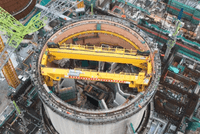
Her er et eksempel fra vores Sri Lanka-projekt. HD7.5t-traverskranen i europæisk stil med enkelt bjælke blev installeret i et lager på et kystkraftværk, mindre end 2 km fra Det Indiske Ocean. Kunden krævede en samlet belægningstykkelse på ≥460μm—180 μm mere end ISO C4-ordningen for langsigtet brug (A4.09's 280 μm). Hvorfor? Under de kombinerede effekter af salttåge fra Det Indiske Ocean, årlige gennemsnitstemperaturer over 35 °C og en luftfugtighed året rundt på over 80%, ville en C3-belægning begynde at danne blære inden for tre år. Ethvert system under 300 μm i dette miljø ville ikke holde i syv år. Til dette projekt, baseret på standard trelagssystem (epoxyzinkrig primer + epoxy MIO mellemlag + polyurethan-toplag), tilføjede vi et ekstra lag af hver af mellemlaget og toplaget, hvilket resulterede i en endelig målt tørfilmstykkelse på 478 μm. Denne sag illustrerer, at ISO-referenceskemaer er udgangspunktet, ikke målstregen – ekstreme forhold kræver tilpasset fortykkelse baseret på standardskemaer, ikke streng overholdelse af et kodenummer.
C5 er ikke længere et konventionelt industrimiljø. Offshore-dokker, olieplatforme og kemiske forarbejdningshaller – i disse miljøer fører belægningsfejl ikke kun til rust, men også korrosionsdybde, der truer den strukturelle integritet.
ISO 12944-5 indeholder referenceskemaer for C5 med 4-6 lag, startende ved en samlet tørfilmstykkelse på 300 μm. Primeren skal have et højt zinkindhold (tørfilmzinkpulver ≥80%). Mellemlaget bruger tykfilmsepoxy MIO eller glasflageepoxy (150 μm+). Toplaget skal have kemisk resistens. Standardmulighederne omfatter både zinkrige epoxy- og uorganiske zinksilikatprimersystemer. Det specifikke valg afhænger af eksponeringsforholdene (C5-I industriel vs. C5-M marin korrosion) og konstruktionskapaciteten på stedet (uorganisk zinksilikat kræver strengere overfladeforberedelses- og hærdningsbetingelser).
For C5-toplakken er der et kompromis:
Alifatisk polyuretan (PU): Bedste farve- og glansbestandighed udendørs, mest UV-bestandig, egnet til udseendefølsomme anvendelser.
Polysiloxan: Vejrbestandigheden overgår PU, kan holde i 15 år udendørs uden større reparationer, men er mere end dobbelt så dyr og kræver strenge anvendelsesbetingelser.
Kloreret gummi: God syre-/basebestandighed og moderat pris, men begrænsede farvemuligheder og lav resistens over for organiske opløsningsmidler.
Et andet let overset krav til C5-miljøer: Stribebelægning til svejsninger og kanter. En arbejder påfører et manuelt pensellag på hver svejsesøm, bolthulskant og skarpt hjørne. Disse geometriske overgange har naturligt tyndere malingsfilm; uden dette ekstra lag bliver de startsteder for rust. Dette trin tager mindre end en halv time, men springes ofte over.
Særlige arbejdsforhold - høj temperatur, kemikalier, fødevarer
Standard ISO 12944-systemerne dækker ikke alle scenarier. Tre specifikke forhold kræver specialiserede belægningssystemer.
Høj temperatur (stålværker/støberier, langvarig >120°C). Glasovergangstemperaturen for standard epoxy er 100-120 °C. Herover begynder belægningen at blødgøre og nedbrydes. Den nederste flange på hovedbjælken til metallurgiske traverskraner, der står over for stålskelestråling, kan nå overfladetemperaturer på 180-250 °C. Dette miljø kræver et silikoneharpiksbaseret belægningssystem: en uorganisk zinksilikatprimer modstår 400 °C, og en silikonealuminium-topcoat modstår 200-300 °C. Undgå organiske harpikser - de vil karbonisere og skalle af ved høje temperaturer.
Alvorlig kemisk korrosion (værksteder for bejdsning/elektroplettering/overfladebehandling). Syre- og alkalitågen i luften angriber belægningen kemisk – den ruster ikke, den opløser direkte malingsfilmen. C5-systemet kan kun "forsinke" denne proces; det kan ikke yde langvarig beskyttelse. Vi anbefaler epoxy-fenoliske tykfilmsbelægningerPåfør dem i et enkelt lag op til 150 μm, i 3-4 lag, for at opnå en samlet tørfilmstykkelse på over 400 μm. Nøglen er hærdning – epoxyphenol hærder meget langsomt ved stuetemperatur og kræver bagning eller tvungen ventilation.
Fødevarer/Farmaceutiske produkter (rene værksteder). Hvis kranen installeres i et GMP-renrum, er den primære bekymring ikke korrosionsbeskyttelse – det handler om, at malingsfilmen ikke skal skalle af og forurene produktet. Det første valg er en rustfri stålkonstruktion, hvis budgettet tillader det. Hvis der anvendes et skema med kulstofstål + belægning, skal det være Hvid epoxy i fødevarekvalitet (FDA-certificeret)Malingens overflade skal opnå en spejlblank finish for nem rengøring. Polyuretan-toplakker kan ikke anvendes – efter langvarig UV-ældning kan de kridte og pulverisere.
Sådan verificerer du, om belægningen er udført korrekt: En femtrins tjekliste til godkendelse af indkøb
Du finder en pålidelig kranproducent, de foreslår et belægningssystem, og systemnummeret er korrekt – men hvordan verificerer du efter konstruktionen, at de har fulgt systemet? Det er nytteløst blot at se på overfladens farve og glans. Følg disse fem trin. For de første fire skal du kræve, at producenten fremlægger sine egne inspektionsrapporter. For det femte kan du hyre en tredjepart.
Trin 1: Inspektion af overfladeforberedelse
Stil dig ved siden af den strukturelle komponent, før du maler. Sammenlign overfladen med ISO 8501-1-standardfotos (en udskrevet kopi eller PDF på din telefon) for at bekræfte, at den overholder Sa2.5. Vigtigste kontroller: Er der resterende glødeskal (mørke, afskalende mærker)? Er der olieforurening (vanddråbetest - sprøjt vand på overfladen; hvis dråberne ikke spreder sig, betyder det, at der er olie til stede)?
Mål ruheden med Testex replikabånd eller en ruhedsmåler, og bekræft, at den er inden for Rz 40-70 μm. Brug af båndmetoden er meget billig, cirka et dusin USD pr. rulle.
Trin 2: Kontrol af klimatiske forhold
Før maling skal ståloverfladetemperaturen, lufttemperaturen, den relative luftfugtighed og dugpunktet måles. Ståloverfladetemperaturen skal være mindst 3 °C over dugpunktet – ellers vil der dannes kondens på stålet, og det er nytteløst at påføre primer på en vandfilm. Relativ luftfugtighed over 85% er ikke tilladt til påføring (epoxyhærdning påvirkes i høj grad af luftfugtighed).
Trin 3: Tørfilmtykkelse (DFT)
I henhold til SSPC-PA2-standarden: tag 5 målepunkter pr. 10 m², mål 3 gange på hvert punkt, og tag gennemsnittet. Acceptregler:
Enhver enkelt aflæsning må ikke være mindre end 80% af den angivne værdi.
Gennemsnittet af alle punkter må ikke være mindre end den angivne værdi.
Hvis du for eksempel kræver en samlet DFT på 200 μm pr. System A4.14, må intet enkelt målepunkt være under 160 μm, og gennemsnittet af alle punkter skal være ≥200 μm.
Trin 4: Detektion af elektriske gnister (ferie)
Når belægningen er hærdet (typisk 24-48 timer efter påføring), skal du bruge en feriedetektor til at gennemsøge hele overfladen. Beregn detektionsspændingen ved hjælp af formlen: 5V/μm × Total DFT (μm).
Hvis din samlede DFT er 200 μm, er detektionsspændingen = 5 × 200 = 1000 V. Når sonden bevæger sig hen over belægningen, vil eventuelle punktpunkter (ferier) skabe en gnist – gniststedet er et bart stålpunkt, hvor rust helt sikkert vil starte. Ferier findes typisk ved svejserødder, hjørner og områder med for høj ruhed.
Trin 5: Adhæsionstest
For DFT ≤250 μm, brug tværsnitstest (ISO 2409) Rids et 6×6 gitter med en kniv, sæt tape på, træk det af, og tæl hvor mange firkanter der er faldet af. For en DFT >250μm, brug aftrækstest (ISO 4624) : Bind en metalvogn til belægningen med en speciel epoxy, hærd den, og mål den trækkraft, der kræves for at trække den af. Kravet er ≥5 MPa.
Almindelige belægningsfejl – en oversigt
Defekter i belægningen er ikke "uheld". Der er altid kun to underliggende årsager: utilstrækkelig overfladebehandling eller forkert hærdning af belægningen.
Defekt
Beskrivelse
Grundårsag
Når det vises
Blærer
Små buler på belægningsoverfladen, 1-5 mm i diameter; at skære dem op afslører vand eller luft
Opløselige salte, der efterlades på ståloverfladen (mest almindeligt ved havsand, der bruges til blæsning uden ordentlig vask); osmotisk tryk trækker vand ind i belægningen
Mest almindelig efter søtransport; optræder i partier 3-6 måneder senere
Nålehul
Små synlige huller på belægningsoverfladen, 0,1-0,5 mm i diameter; ligner fine hvide prikker under lys
Luftbobler, der opstod under blanding af maling, blev ikke fjernet før påføring, eller sprøjtepistolen var for langt væk, hvilket fik malingen til at hærde i luften.
Kan findes på applikationssiden; let at finde med en feriedetektor
Appelsinskal
Rynket malingoverflade, ligner en appelsinskal
Sprøjtepistolen er for langt væk, malingens viskositet er for høj, eller der er ikke tilsat tilstrækkelig fortynder. Opløsningsmidlet er fordampet for hurtigt; malingen har ikke haft tid til at jævne sig før tørring.
Synlig med det samme på applikationsstedet
Revner
Uregelmæssige revner på belægningsoverfladen; dybe revner kan nå det mellemliggende lag
Uforenelighed mellem toplag og mellemlag (f.eks. påføring af hurtigtørrende alkyd-toplag oven på epoxy MIO), eller malingsfilm påført for tyk i én omgang
Uger til måneder efter påføring
Delaminering
Hele belægningslaget skaller af; adskillelsespunktet er mellem primer og stålplade
Ukvalificeret overfladebehandling - utilstrækkelig affedtning eller sandblæsningsgrad nåede ikke Sa2.5
Når som helst, især efter strukturel deformation under belastning
Et praktisk tip: Blærer og delaminering opstår sandsynligvis efter varerne ankommer til destinationshavnen, ikke i værkstedet. Temperaturen, fugtigheden og salttågemiljøet inde i en søcontainer fungerer som et accelereret korrosionskammer. Derfor kræver vi én inspektion 48 timer efter færdiggørelse af belægningen og en anden før pakning. Hvis belægningen består begge inspektioner, er sandsynligheden for problemer efter ankomst meget lav.
Hvad vi har gjort
Fra standard C3-kraner til indendørs værksteder til den srilankanske kystnære C4-traverskran med en tykkelse på 460 μm og en tykkelse på 460 μm, der er korrosionsbestandig, til den specielle belægning til Jiuquan satellitopsendelsescenter – gennem årene har vi implementeret belægningssystemer til en bred vifte af korrosive miljøer, der dækker de fleste forhold, du sandsynligvis vil støde på.
Hvis du i øjeblikket køber en kran eller har udstyr, der skal have større korrosionsbeskyttelsesvedligeholdelse, kan vi give en skræddersyet anbefaling til valg af belægning og et tilbud til dine specifikke arbejdsforhold. Du er velkommen til at sammenligne vores tilbud med enhver anden producent, du i øjeblikket giver tilbud på – og du er velkommen til at bruge acceptchecklisten i denne artikel til verifikation.
FAQ
Hvad er standardbelægningen til en standard indendørs traverskran?
C3-miljø, System A3.08 (Epoxyzinkfosfatprimer 80μm + Polyurethan-toplak 40μm x 2 lag), total tørfilmstykkelse ≥160μm, beskyttelsesvarighed 5-15 år.
Kan jeg bare bruge det tykkeste system uanset miljøet?
Teknisk muligt, men økonomisk spild af penge. Brug af et C5-system i et C3-miljø er som at bruge en forhammer til at knække en nød. Malingsomkostningerne fordobles, påføringstiden øges, og udstødningsemissionerne stiger, men den beskyttende effekt er næsten den samme som System A3.11 (C3 langsigtet). At vælge i henhold til miljøet er den korrekte tilgang.
Hvad er bedre, varmgalvanisering eller lakering?
Hver har sine egne anvendelsesscenarier. Varmgalvanisering har en længere korrosionsbestandighed (20-25 år), tilbyder fuldstændig dækning (inklusive rørindvendige dele og sprækker), men processen er kompleks, farven er begrænset til en grå-sølvfarvet farve, og den kan ikke repareres på stedet. Maling giver farvevalg, kan repareres på stedet og har en lavere pris, men kræver større vedligeholdelse hvert 7.-15. år. For de fleste industrielle traverskraner er maling tilstrækkelig og mere fleksibel.
Hvordan kan jeg kontrollere, om det belægningssystem, som producenten har angivet, er pålideligt?
Bed dem om fem ting: 1) Optegnelser over sandblæsning + sammenligningsbilleder i henhold til Sa2.5-standarden; 2) Mærke, model og batchnummer for hvert lag maling; 3) Optegnelser over tørfilmstykkelse (målt i henhold til SSPC-PA2-standarden); 4) Rapport om salttågetest (≥720 timer uden rødrust for epoxysystemer); 5) Påførerens kvalifikationscertifikat og daglige klimaregistreringer under maling.
Hvor mange år kan en belægning garantere rustfrihed?
Den "beskyttelsesvarighed", der er defineret i ISO 12944, er ikke "tiden indtil rusten starter", men tiden indtil den første større reparationsmaling er nødvendigPå dette tidspunkt kan belægningen vise lokale rustpletter, men selve stålkonstruktionen er intakt. Kort varighed: >5 år (ruststop). Mellem varighed: 7-15 år. Lang varighed: 15-25 år. Bemærk: "Lang varighed" betyder ikke "for evigt". Regelmæssig inspektion og mindre reparationer (genpåføring af topcoat) er normalt.
krystal
Kran OEM ekspert
Med 8 års erfaring i at tilpasse løfteudstyr, hjalp 10.000+ kunder med deres præ-salg spørgsmål og bekymringer, hvis du har relaterede behov, er du velkommen til at kontakte mig!


.png?w=200&h=134)