Overhead Crane Operation Safety Management: Core Standards, Hazards, and Risk Prevention

Date: 10 Apr, 2026

Lifting operations are a critical part of industrial production and engineering construction. The processes are complex and involve significant safety risks. Any violations, equipment defects, or management lapses can easily lead to falling loads, crushing collisions, and casualties, posing serious threats to production safety and personnel health. To strengthen safety management, standardize full-process operations, and prevent risks, the core safety regulations, operating requirements, and risk control measures are summarized below to provide solid guidance for safe production.

Accident Warnings and Risk Analysis in Lifting Operations

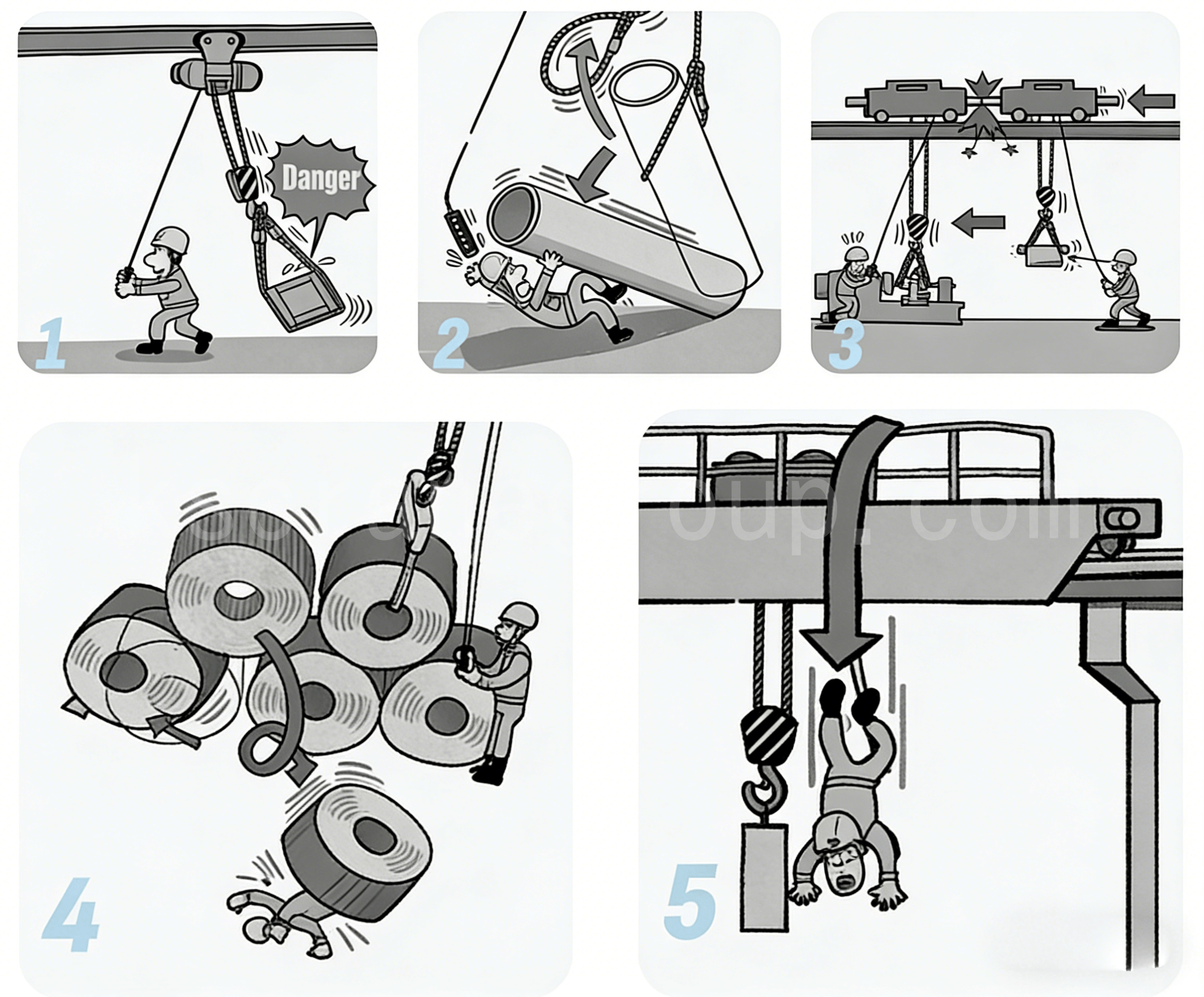
Over the years, lifting accidents caused by violations, equipment defects, and poor management have occurred frequently, with severe lessons learned:

  1. In 2003, at a steel plant in Dalian, due to lack of wire rope inspection and personnel staying in a hazardous area, the rope broke during lifting, causing molten slag to overturn and resulting in a fatality.
  2. In 2011, at an aluminum processing plant, reckless crane operation caused a collision, nearly leading to a fall from height; in another workshop the same year, failure to raise the sling led to overturning of a platform, fortunately without casualties.
  3. In 2007, at a company in Wenzhou, an unlicensed operator used a crane without an upper limit device, causing rope breakage and falling load, resulting in a fatality.

      Main Hazards and Causes

      Statistics show that falling loads (34%) and crushing/collision (30%) are the most frequent accidents, along with risks such as overhead crane tipping, object impact, and electric shock.

      Management Causes:

      1. Unlicensed personnel engaged in lifting operations.
      2. No work permits for overload or tandem lifting.
      3. Lack of safety briefing before operation.
      4. Inadequate implementation of safety measures.
      5. Equipment put into service without testing or with failed tests.

              Direct Causes:

              1. No dedicated signalman or unclear signals, causing rapid descent and unhooking.
              2. Lack of wire rope inspection, leading to breakage under excessive load.
              3. Improper hooking causing instability and collision.
              4. Poor hazard awareness leading to crushing during load movement.
              5. Improper lifting methods or insecure rigging causing falling loads.
              6. Incorrect load estimation causing overload and brake failure.
              7. Insufficient knowledge and illegal operation by personnel.
              8. Poor coordination in multi-trade operations without unified command.
              9. Equipment used without maintenance, leading to failure.
              10. Improper selection of slings (rope, chain, shackles), causing accidents.

              Core Lifting Gear Usage and Scrap Standards

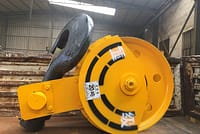
              Hooks and wire ropes are key load-bearing components, and their condition directly determines safety. Strict compliance with usage and discard standards is required.

              1. Hook Requirements

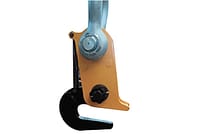
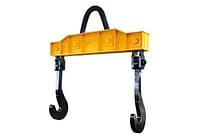
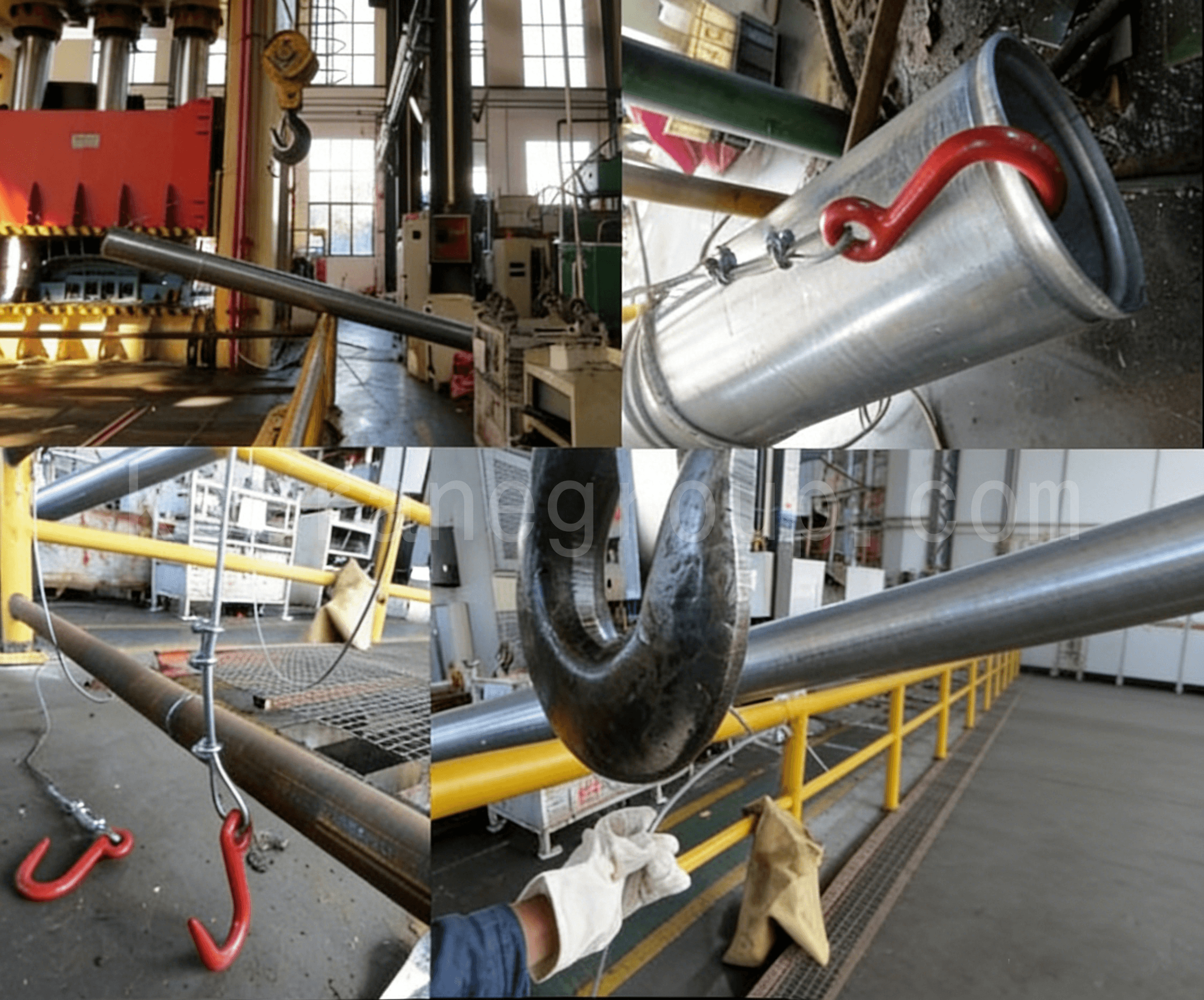
              • Use: No cast hooks; ensure firm fixing, flexible rotation, no cracks or defects; no welding repair; equipped with anti-unhooking safety devices.
              • Scrap: Cracks, wear >10%, opening increase >15%, twist >10°, or plastic deformation require immediate discard; worn liners and pins must be replaced.

              2. Wire Rope Requirements

              • Characteristics: High strength and reliability, but prone to wear, heat, and corrosion; improper use may cause breakage.
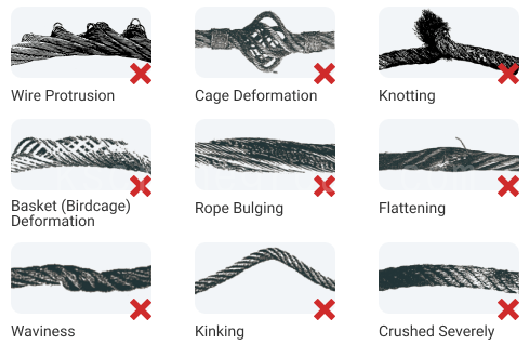
              • Scrap: Visible deformation such as waviness, strand extrusion, cage deformation, diameter change, bending, twisting, or crushing requires immediate discard.
              Overhead Crane Operation Safety Wire Rope Requirements

              Overhead Crane Operation Safety Standard Procedures

              As key personnel in lifting operations, operators must be certified, operate in compliance, and strictly follow full-process safety regulations.

              1. Basic Requirements:

              • Overhead crane operators must pass professional training and hold a valid operation certificate; untrained or untested personnel shall not operate independently.
              • Overhead crane operators must be at least 18 years old, in good health, and free from diseases or physical conditions that may affect safe operation (e.g., color blindness, visual/hearing impairment, epilepsy, hypertension, heart disease, vertigo, mental disorders, or sudden fainting).
              • Operators must be familiar with the performance and functions of all crane mechanisms and devices, as as have electrical and fire safety knowledge.
              • Smoking, eating, reading, or using mobile phones during operation is prohibited; strict discipline must be observed.
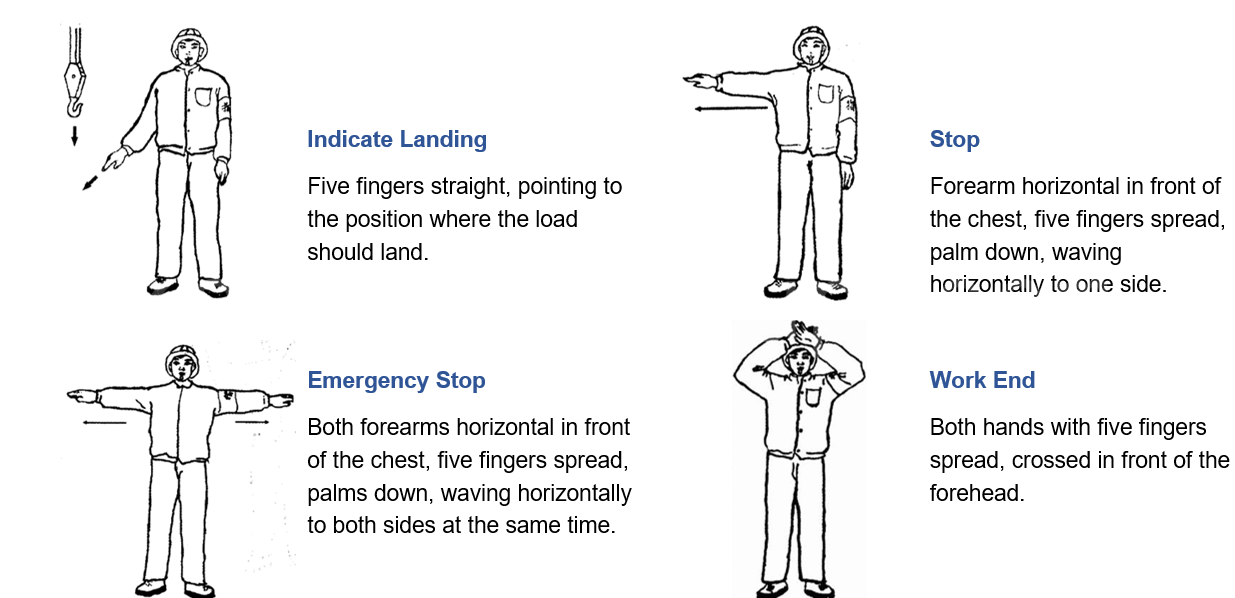
              • Operators must be familiar with all signal commands.

              2. Operational Principles:

              Follow five principles: stability, accuracy, speed, safety, and proper control.

              • Before Operation: Wear PPE properly; use insulated shoes and fitted workwear; access via ladders; inspect equipment and conduct no-load testing.
              • During Operation: Sound warnings when starting, lifting, or approaching personnel; adjust speed stepwise; no sudden reversing or skew lifting; keep load 0.5 m above obstacles; no long suspension; no maintenance during operation.
              • After Operation: Park at the designated location; raise hook; return controls to zero; cut power; clean and lubricate equipment.

              3. Emergency Measures:

              • Brake failure: Stay calm, lift/lower slowly, sound warnings, move load to a safe area and land safely.
              • Electrical fire: Cut power immediately; use dry powder or CO₂ extinguishers; no water on live equipment.

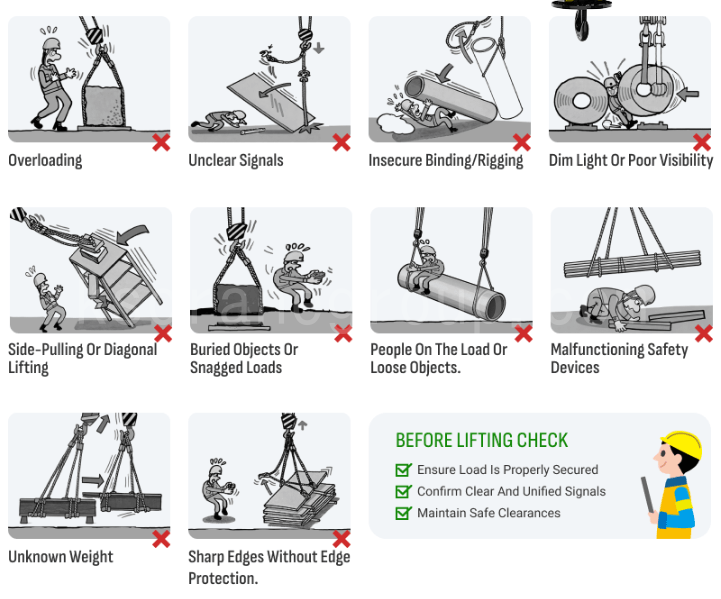
              “Ten No-Lift” Safety Rules for Overhead Crane Operation Safety

              Overhead Crane Operation Safety strictly enforces the following prohibitions:

              • No lifting of overloaded loads;
              • No lifting with unclear or illegal signals;
              • No lifting if load is not securely fastened;
              • No lifting in poor visibility;
              • No skew or angled lifting;
              • No lifting with people or loose items on the load;
              • No lifting if safety devices are defective;
              • No lifting of sharp objects without protection;
              • No lifting if load weight is unknown;
              • No lifting buried or hooked objects.
              Overhead Crane Operation Safety Ten No Lift Safety Rules

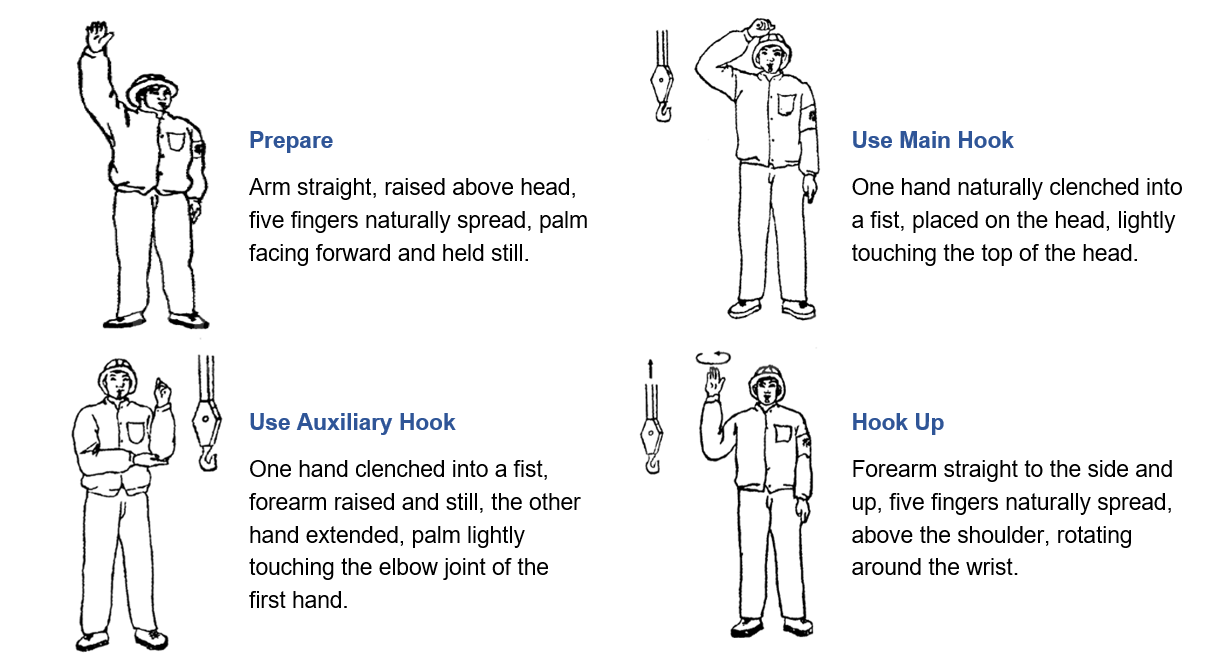
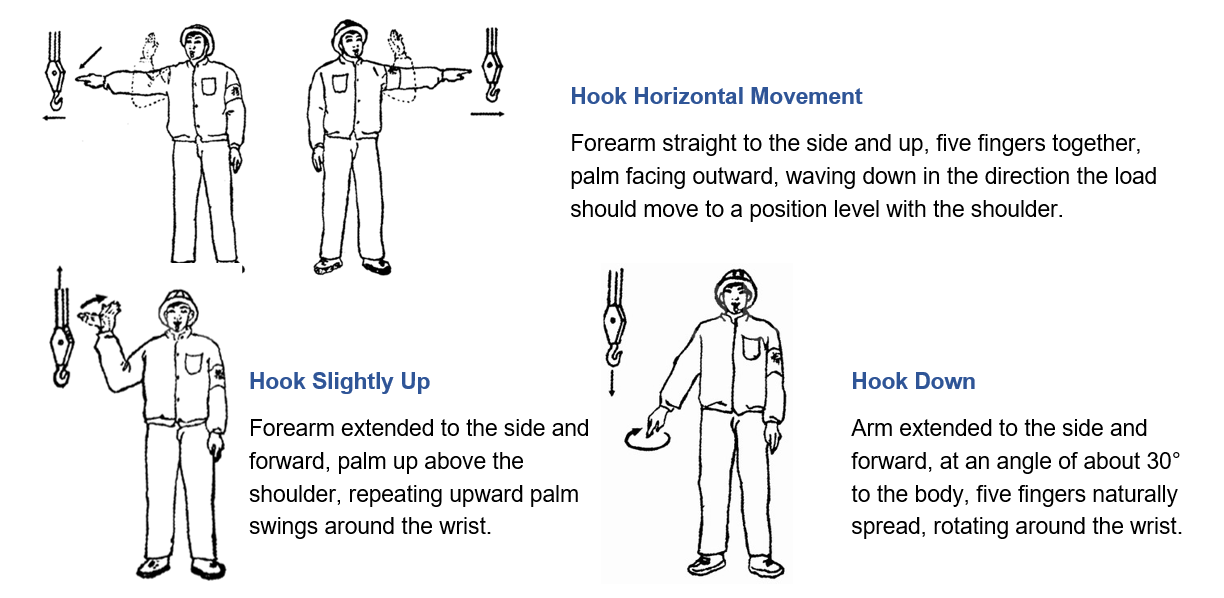
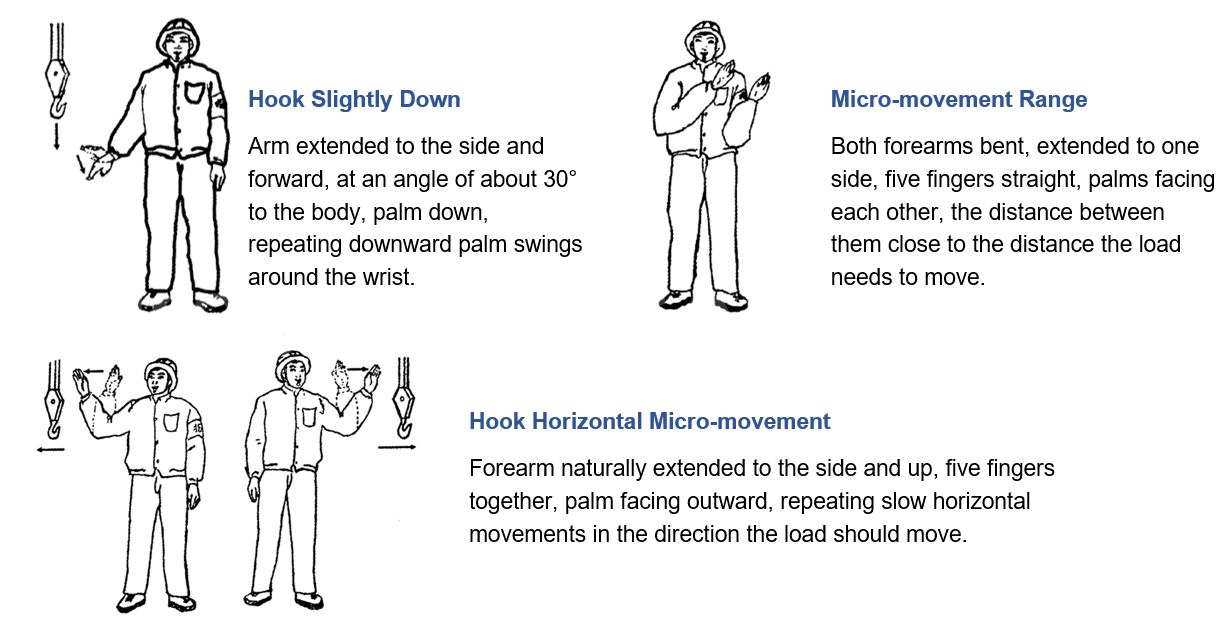
              Standard Lifting Signal Hand Gestures for Overhead Crane Operation Safety

              Standardized hand signals are essential for overhead crane operation safety.

              Standard Lifting Signal Hand Gestures1
              Standard Lifting Signal Hand Gestures2
              Standard Lifting Signal Hand Gestures3
              Standard Lifting Signal Hand Gestures4

              Safety is the foundation of production, and standardization ensures safety. Overhead crane operation safety directly affects personnel safety and operational stability. All personnel must strengthen safety awareness, strictly follow regulations, enhance equipment maintenance, refine site management, and eliminate violations to build a strong safety defense line and ensure safe operations throughout the entire production process.

              Krystal
              krystal
              Crane OEM expert

              With 8 years of experience in customizing lifting equipment, helped 10,000+ customers with their pre-sales questions and concerns, if you have any related needs, please feel free to contact me!

              TAGS: Overhead Crane Operation Safety
              English
              Español Português do Brasil Русский Français Deutsch 日本語 한국어 العربية Italiano Nederlands Svenska Polski ไทย Türkçe हिन्दी Bahasa Indonesia Bahasa Melayu Tiếng Việt 简体中文 বাংলা فارسی Pilipino اردو Українська Čeština Беларуская мова Kiswahili Dansk Norsk Ελληνικά English