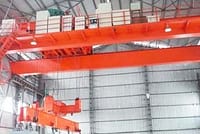
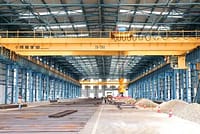
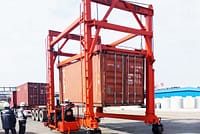
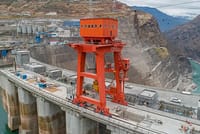
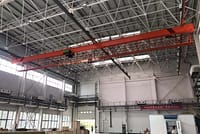
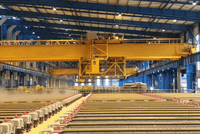
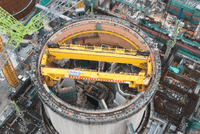
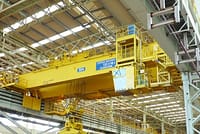
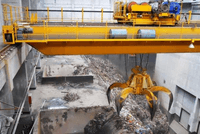
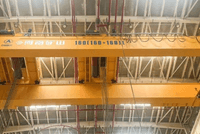
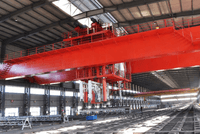
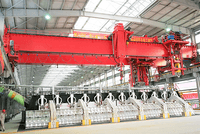
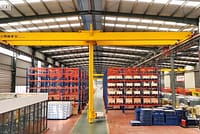
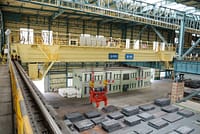
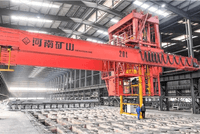
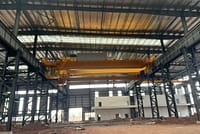
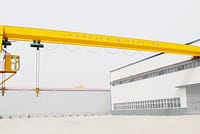
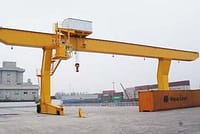
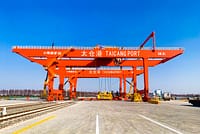
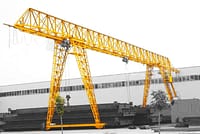
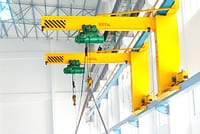
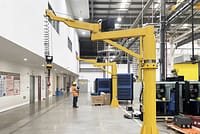
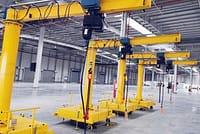
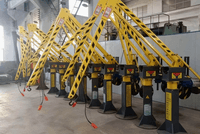
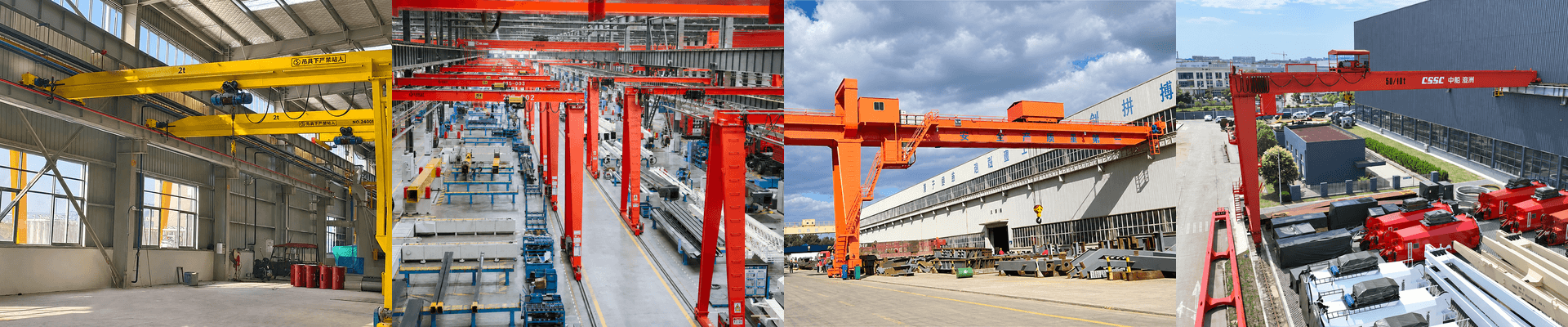
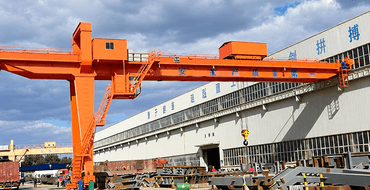
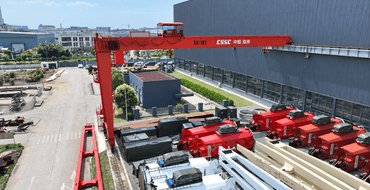
Semi-Gantry Crane

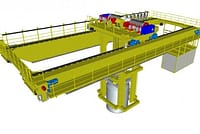
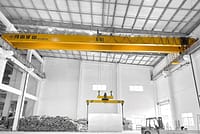
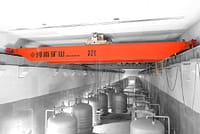
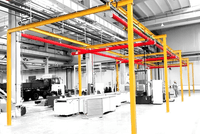
The semi-gantry crane combines an elevated runway on one side with a ground-running support leg on the other, enabling vertical lifting, cross travel, and longitudinal load movement. It can be customized according to the required lifting capacity, span, lifting height, duty class, and control method, with single-girder, double-girder, and multiple hoisting configurations available to suit different site conditions and material-handling requirements.
Types of Semi-Gantry Cranes

MB Single-Girder Semi-Gantry Crane

  • Suitable for light- to medium-duty daily lifting and handling operations.
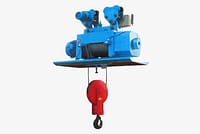
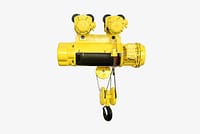
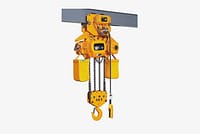
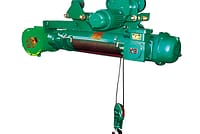
  • Can be configured with CD1, MD1, or HC electric wire rope hoists depending on load and application requirements.
  • The single-girder design and hoist make it relatively affordable, making it a cost-effective choice for everyday lifting tasks.

FEM Standard Single-Girder Semi-Gantry Crane

  • The lightweight design reduces the overall weight of the crane, wheel load, and mechanical wear.
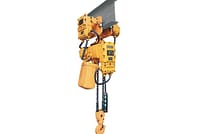
  • Equipped with a FEM standard electric hoist featuring variable-frequency technology, the crane achieves smooth starts, stops, and precise positioning, reducing impact and vibration during material handling.
  • This model is an upgraded version of the MB; its initial purchase cost is higher than that of the MB.

MGB Double-Girder Semi-Gantry Crane

  • Suitable for heavier loads and larger spans, offering greater stability.
  • For the same lifting capacity, the hook's upper limit position is typically higher than that of the MB model.
  • The total weight and purchase cost of the crane are higher than those of the MB model.

FEM Standard Double-Girder Semi-Gantry Crane

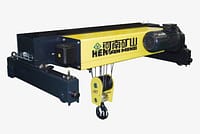
  • The lightweight main girder and compact hoist trolley reduce crane dead weight and wheel loads while retaining heavy-load lifting capacity.
  • The compact hoist trolley reduces structural height and improves headroom utilization.
  • This is an upgraded version of the MGB and is priced higher than the MGB.

Semi-Gantry Crane Applications

Machine Tool and Production Line Loading and Unloading

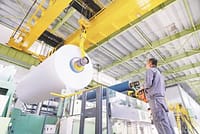
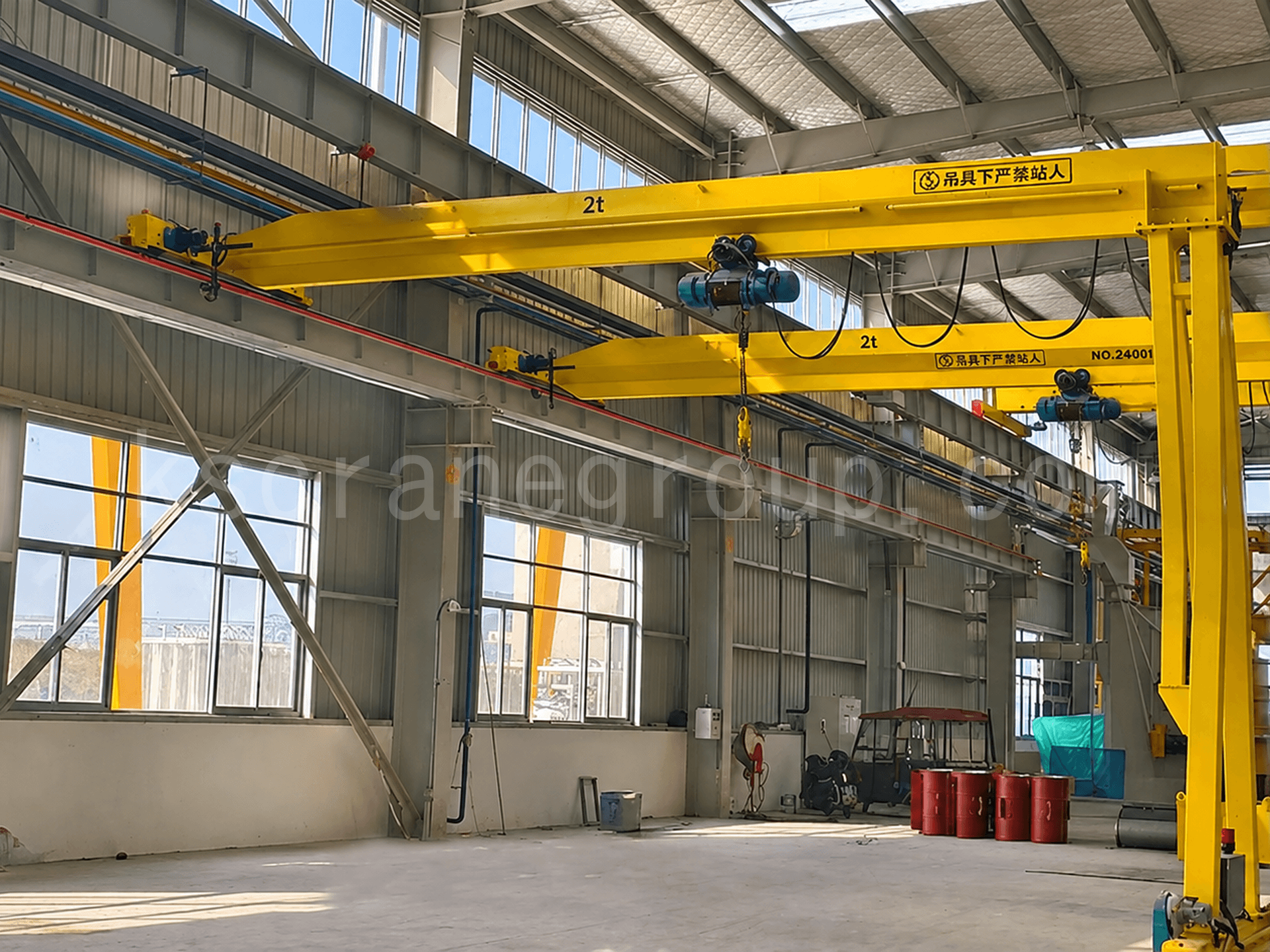
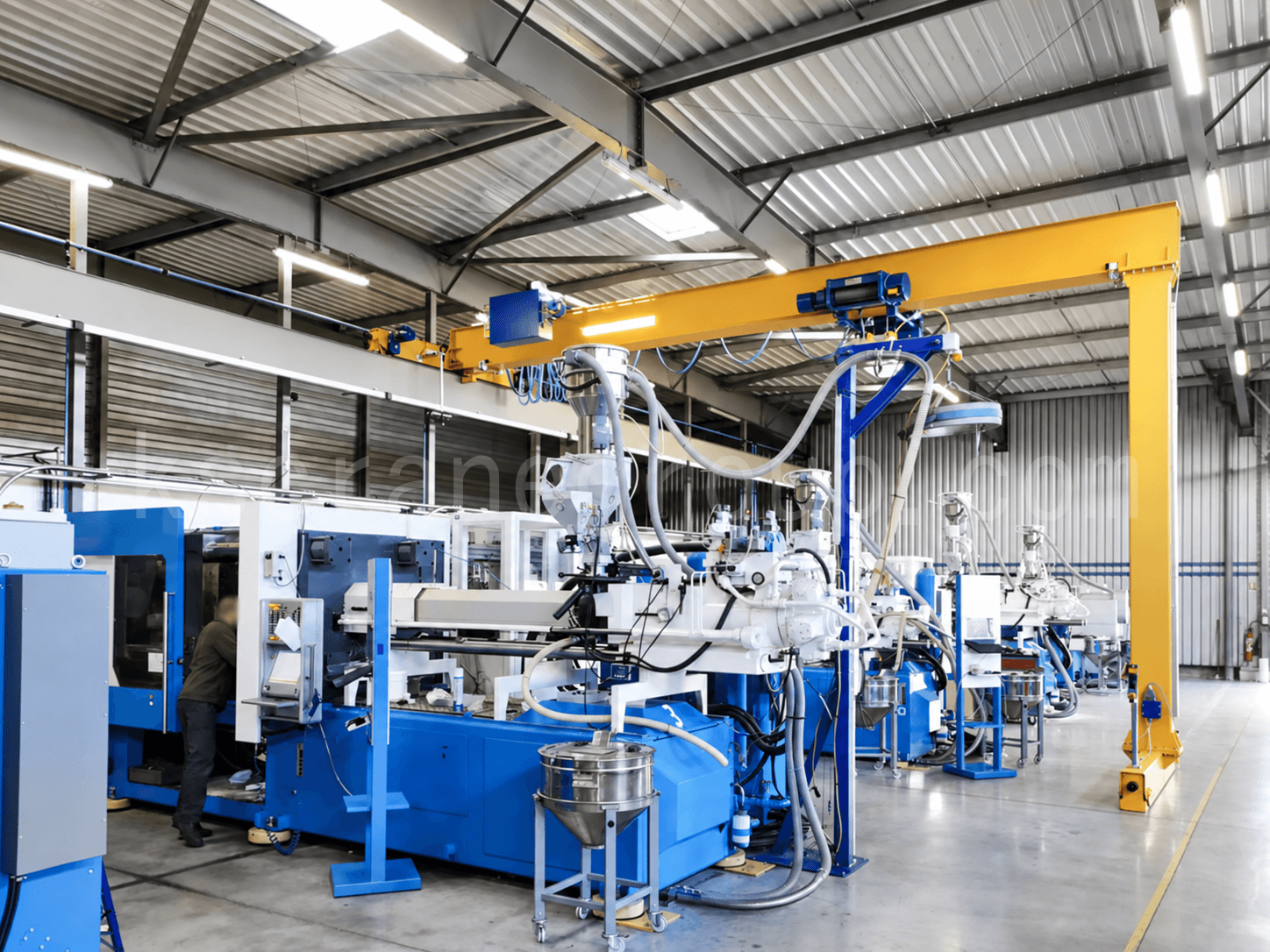
The semi-gantry crane can load and unload raw materials, workpieces, molds, and equipment components, positioning them at designated machining or assembly stations. Low-speed lifting and adjustable travel speeds provide better control during load placement and help reduce the risk of collisions with workpieces or equipment.The image shows a FEM standard single-girder semi-gantry crane working on the assembly line.

semi gantry crane production line application

Material Transfer Between Workshop Processes

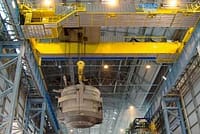
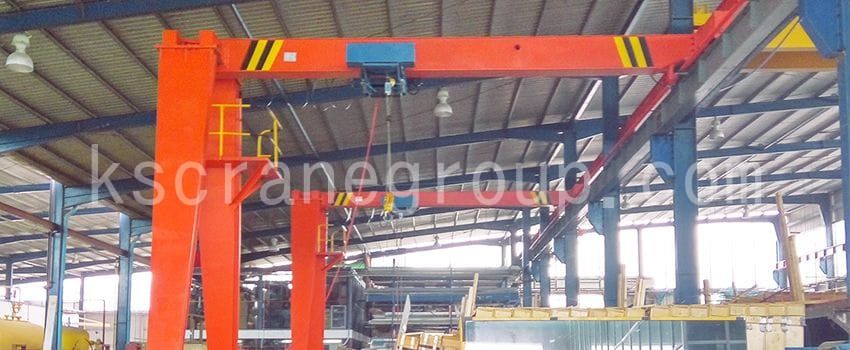
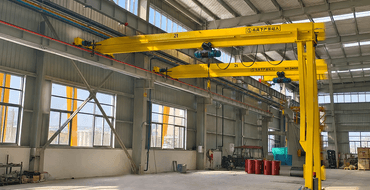
The semi-gantry crane can cover multiple workstations and transfer semi-finished products, components, tooling, and fixtures between machining, assembly, inspection, and storage areas. Its semi-gantry structure can use the workshop's existing runway beam on one side, reducing obstruction to ground-level passageways.The image shows the FEM standard single-girder semi-gantry crane transferring materials between production lines.

semi gantry crane workshop material transfer

Warehouse Material Handling

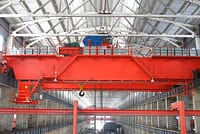
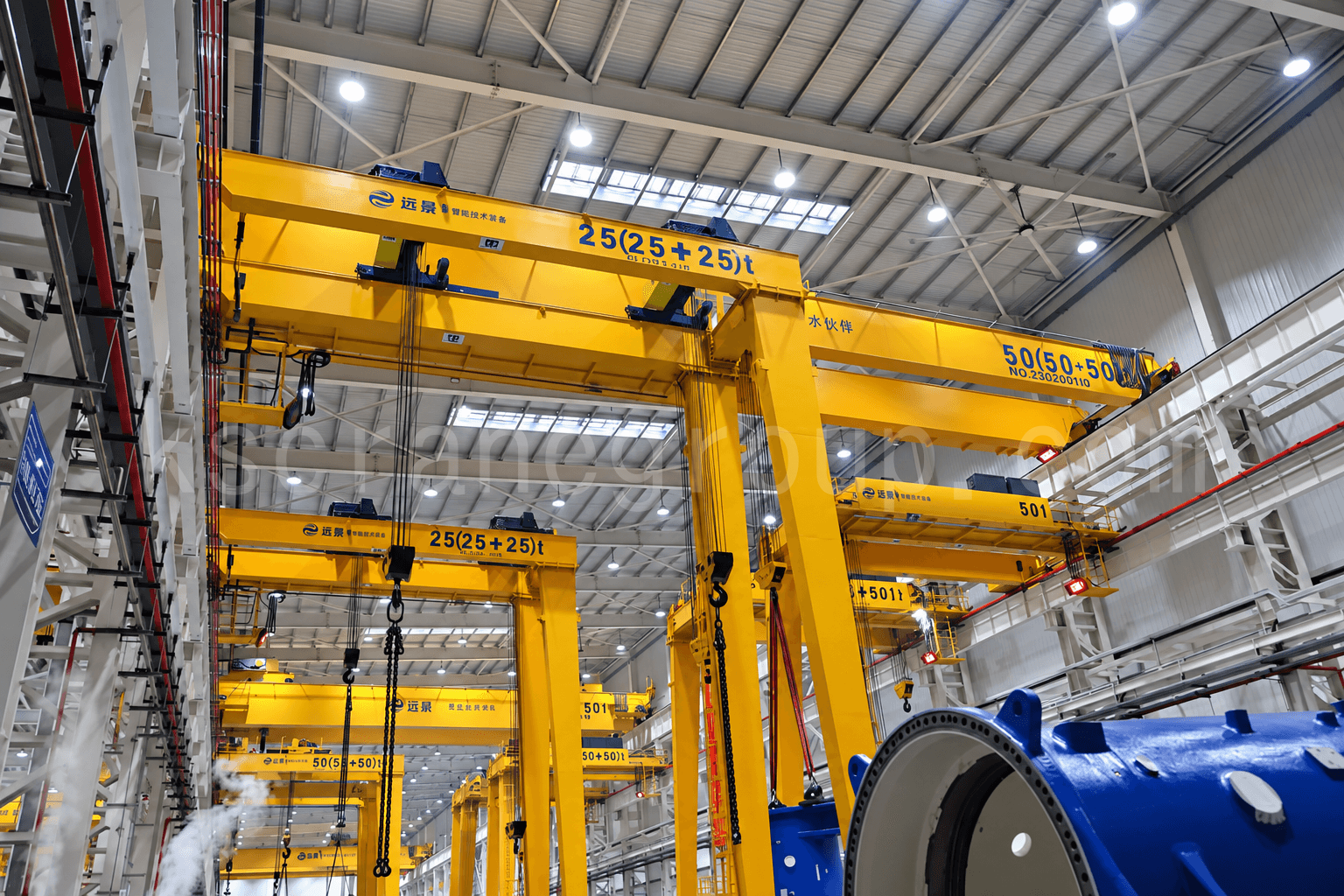
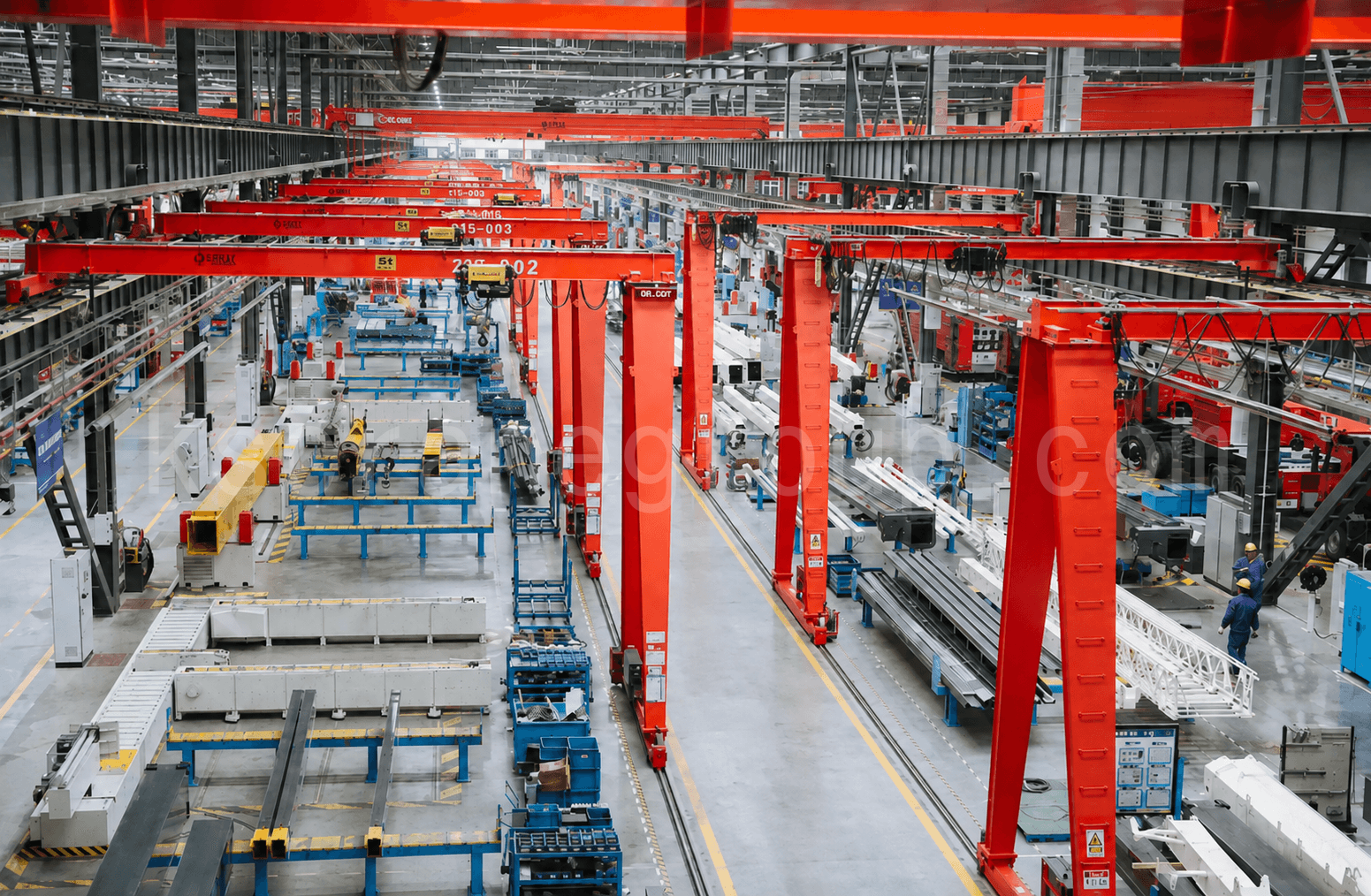
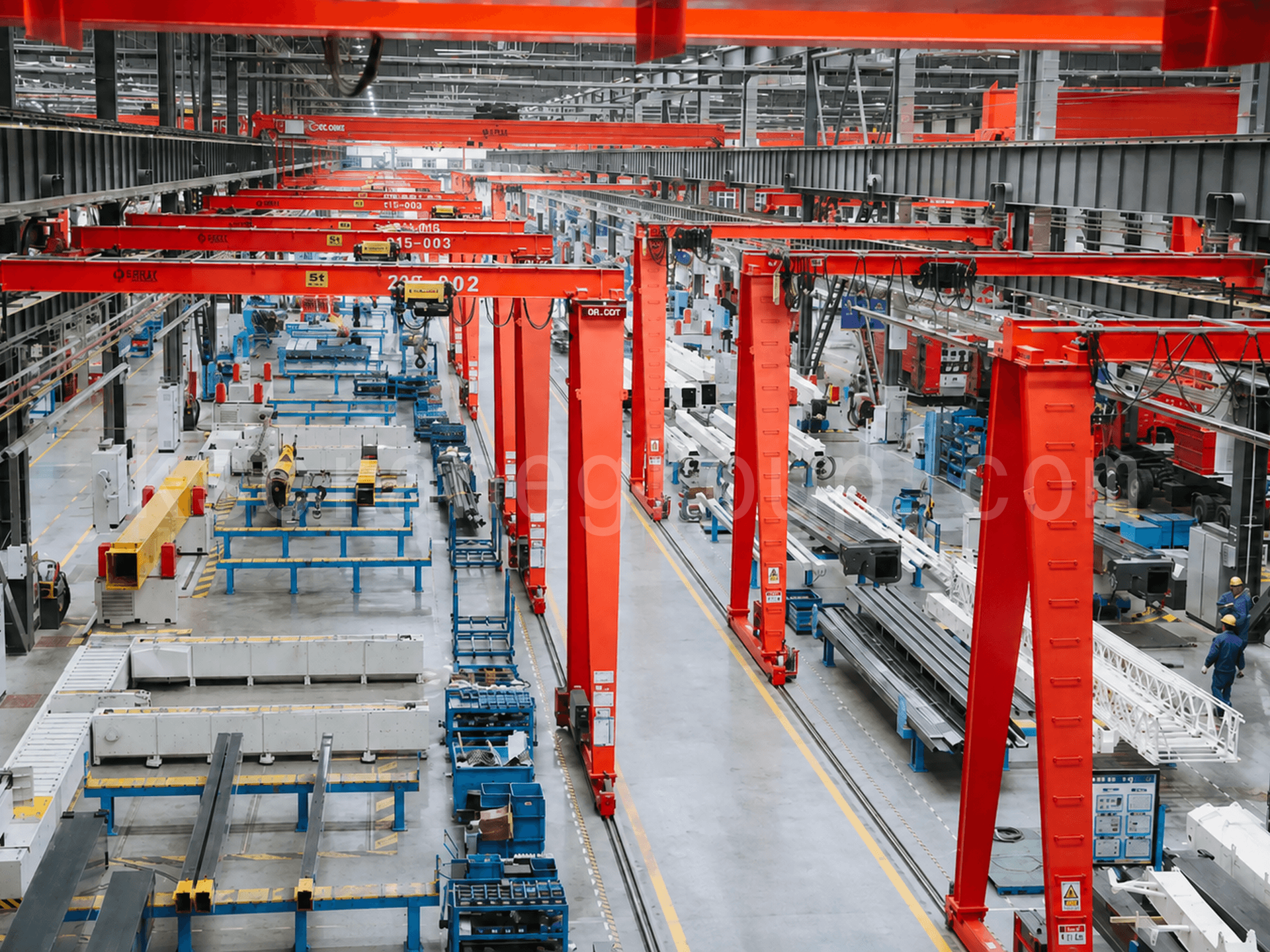
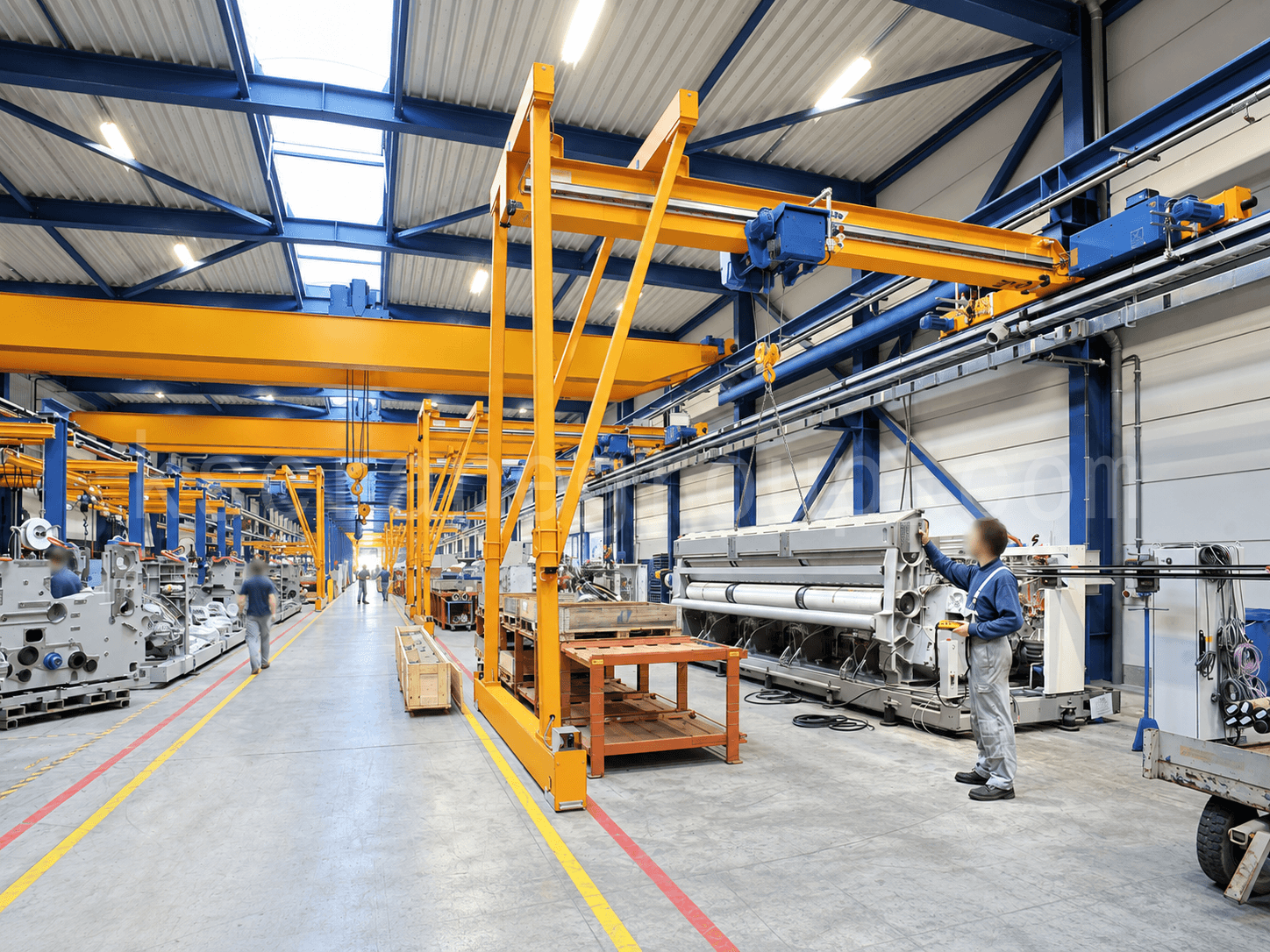
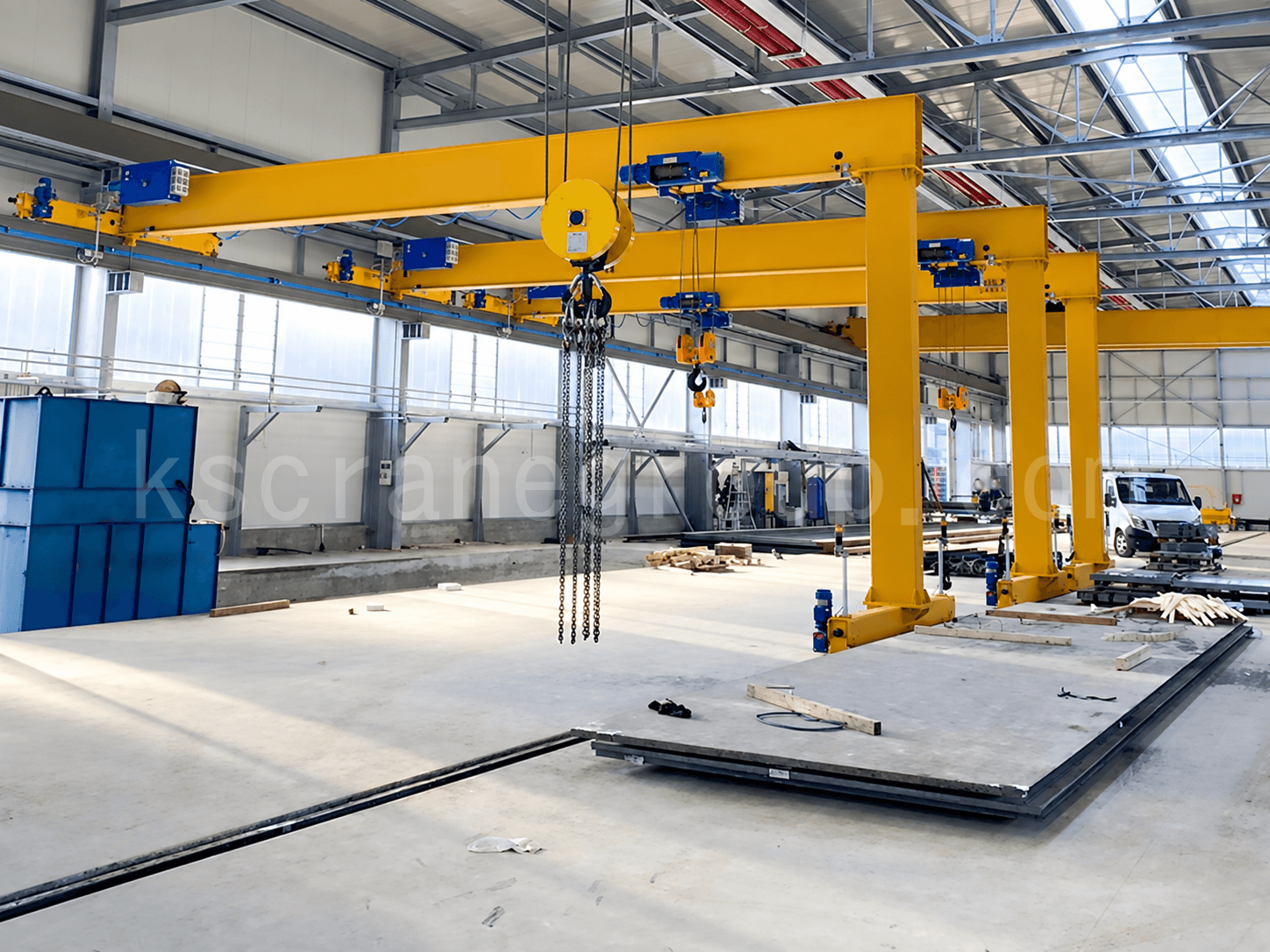
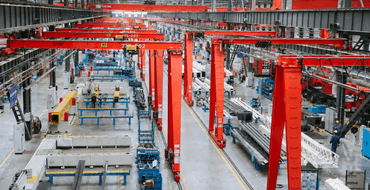
In warehouses,the semi-gantry crane can support receiving, dispatch, stacking, and zone-to-zone transfer in warehouse logistics. It is suitable for large goods, heavy equipment, and other materials that are difficult for forklifts to handle. Its fixed rail system can connect loading areas, storage areas, and dispatch zones, supporting coordinated material handling across different warehouse areas.The image shows multiple FEM standard single-girder semi-gantry cranes ready for collaborative cargo handling in a warehouse.

semi gantry crane warehouse material handling 1

Outdoor Yard Material Handling

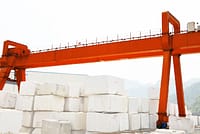
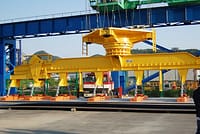
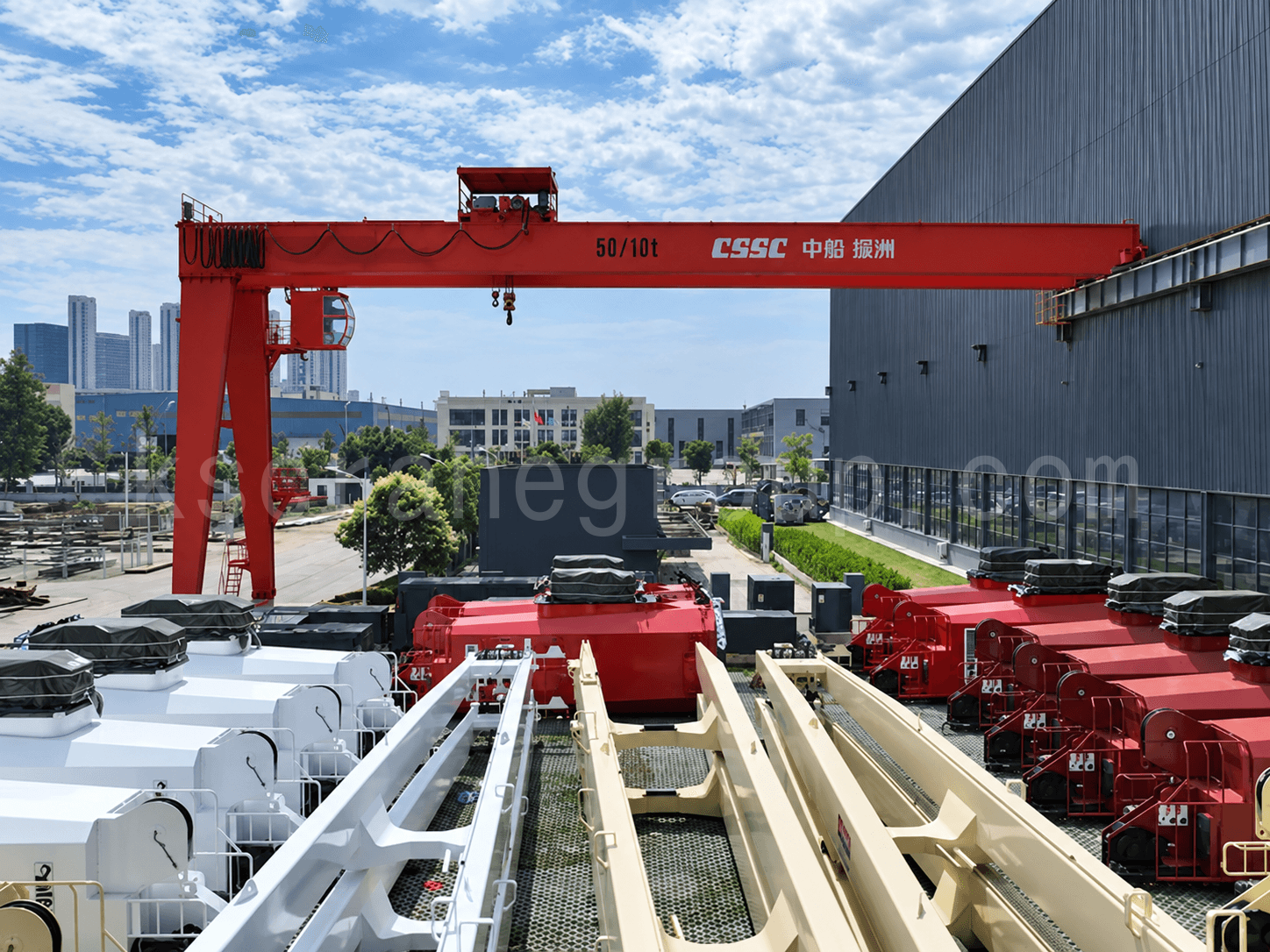
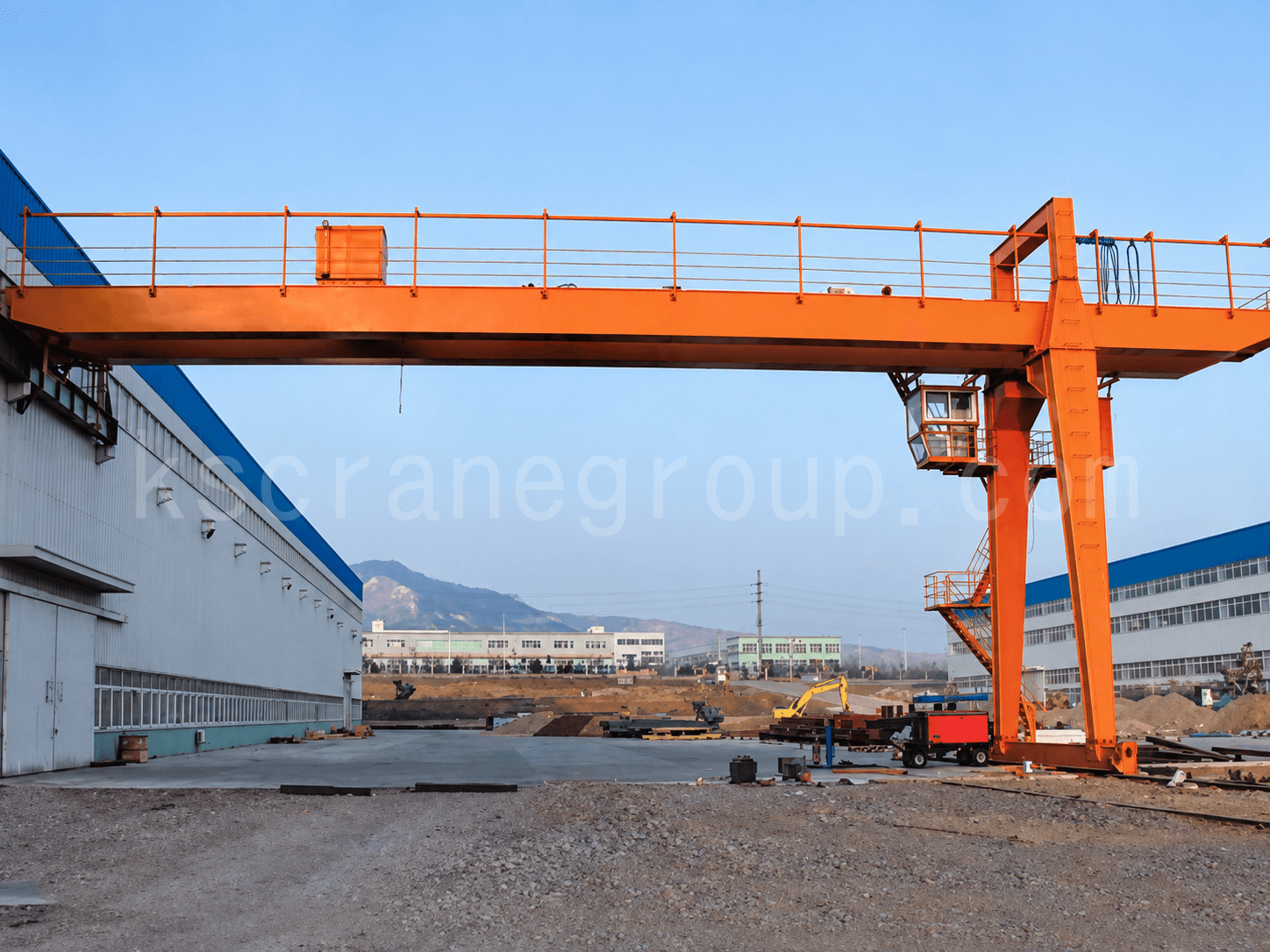
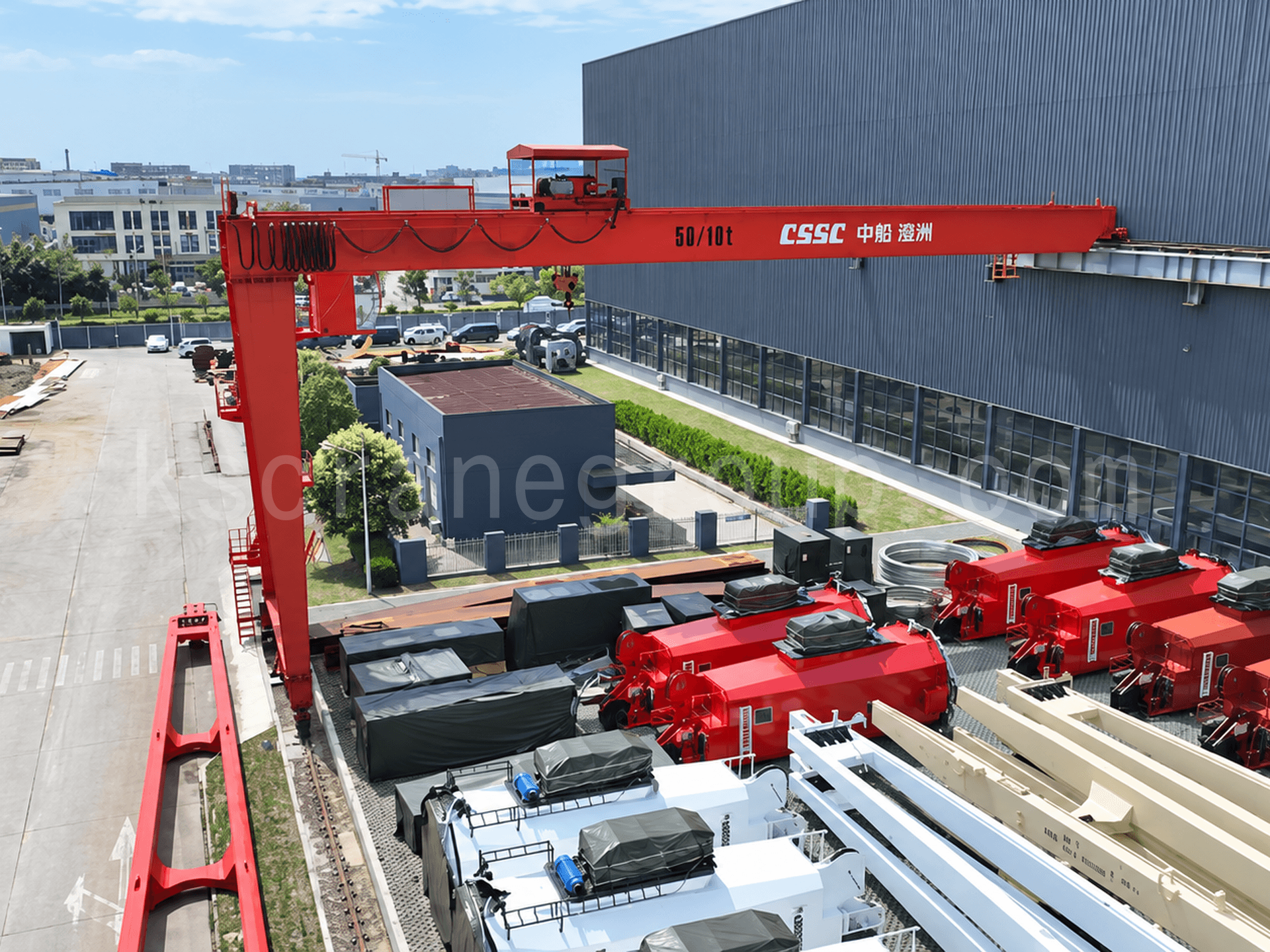
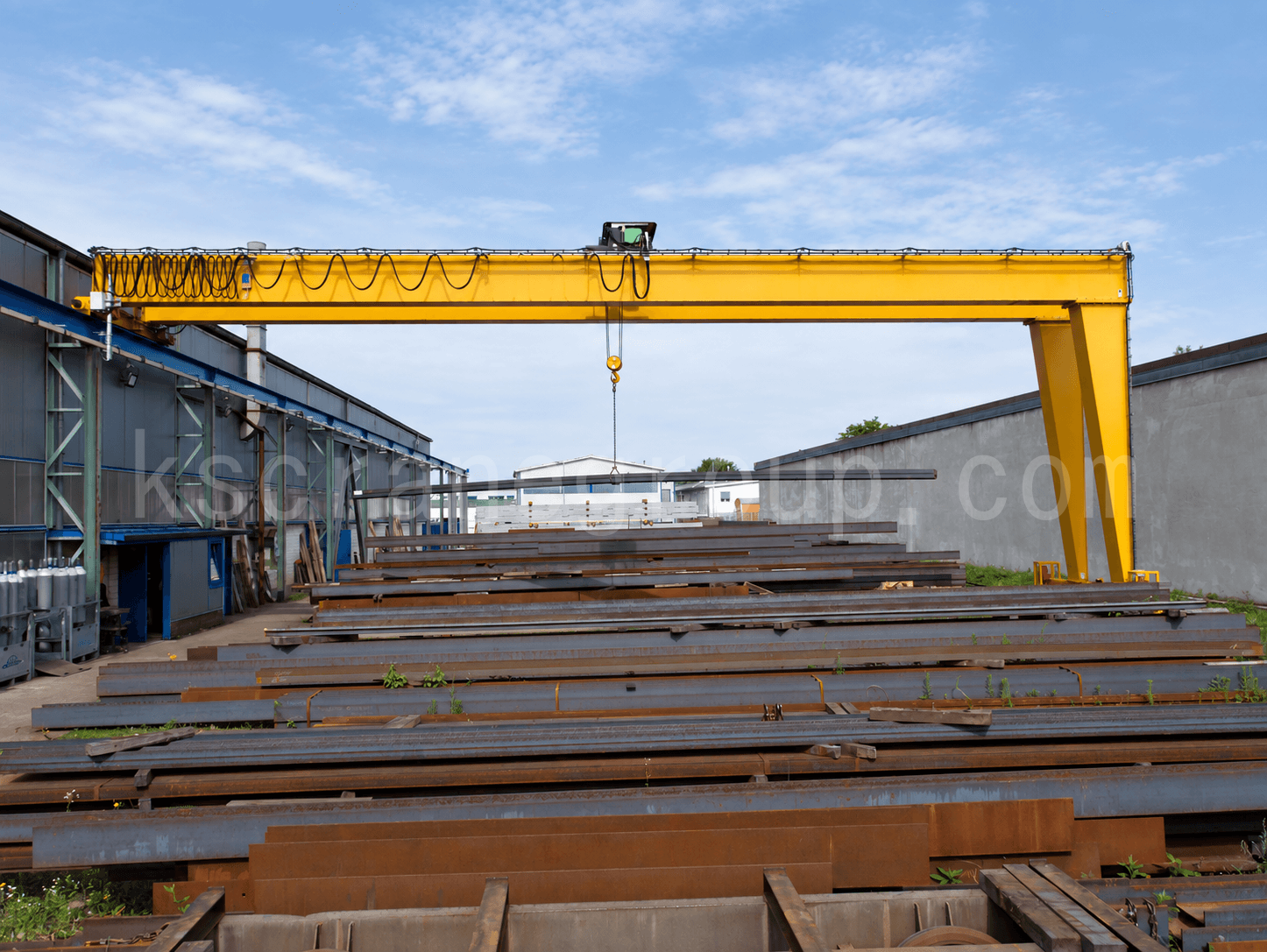
When equipped with suitable rainproof, corrosion-resistant, and wind-protection devices, the semi-gantry crane can handle the stacking, retrieval, and transfer of steel, precast components, and large equipment in outdoor yards. One side uses the existing building runway structure, while the other travels along a ground rail, enabling the crane to cover outdoor working areas adjacent to the workshop.The image shows an FEM standard double-girder semi-gantry crane performing handling operations in an outdoor material yard.

semi gantry crane outdoor yard application

Vehicle Loading and Unloading

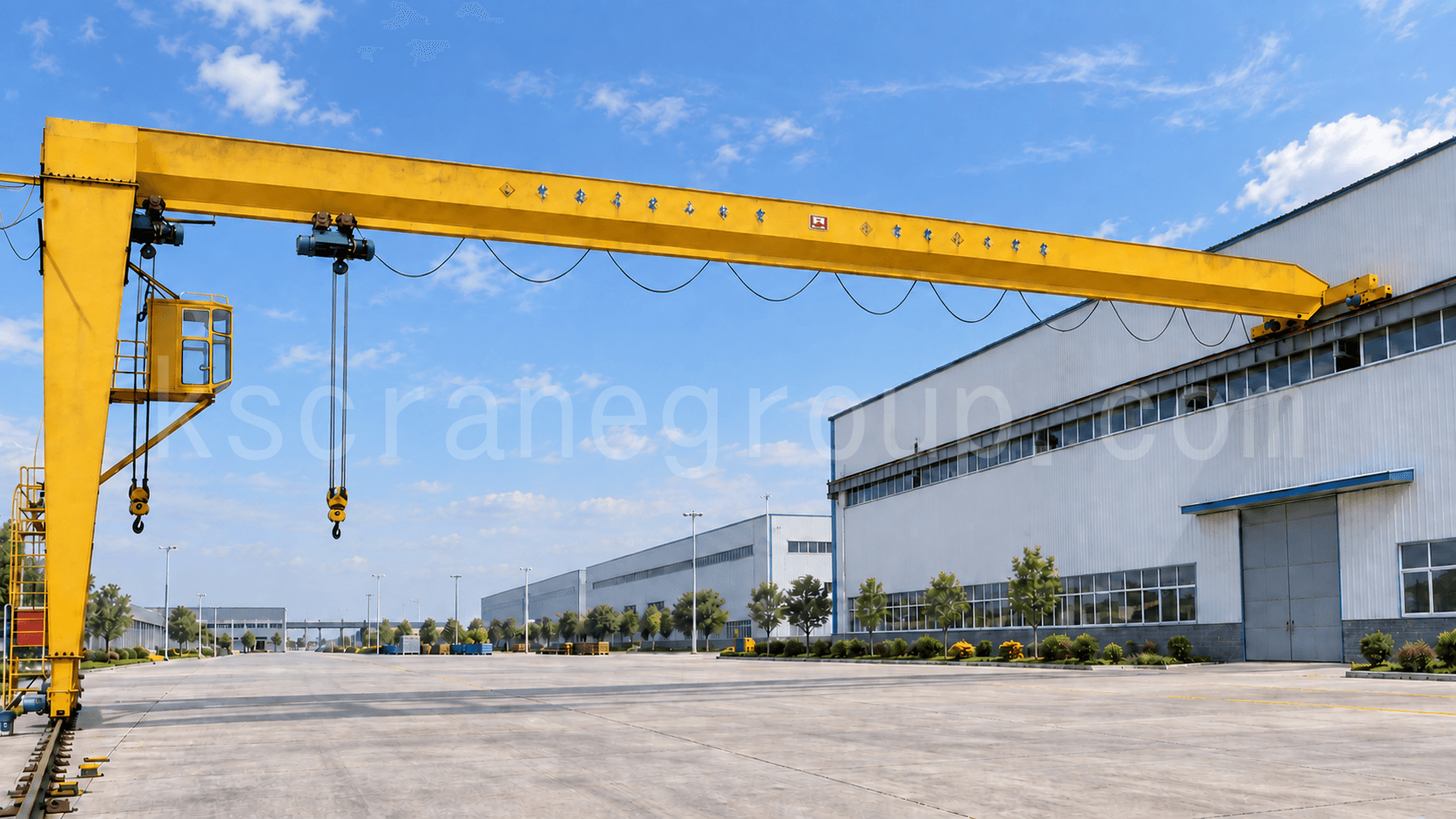
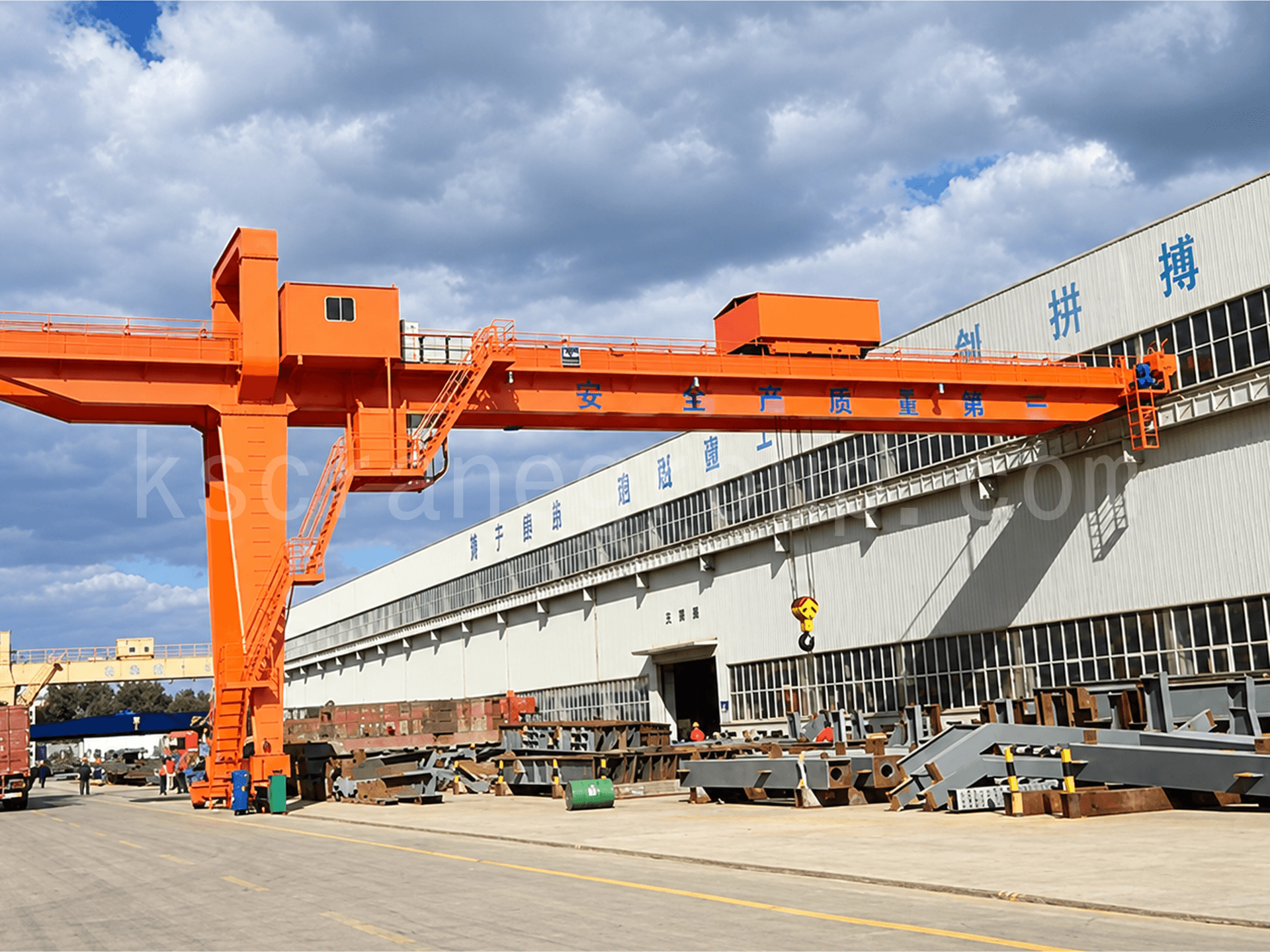
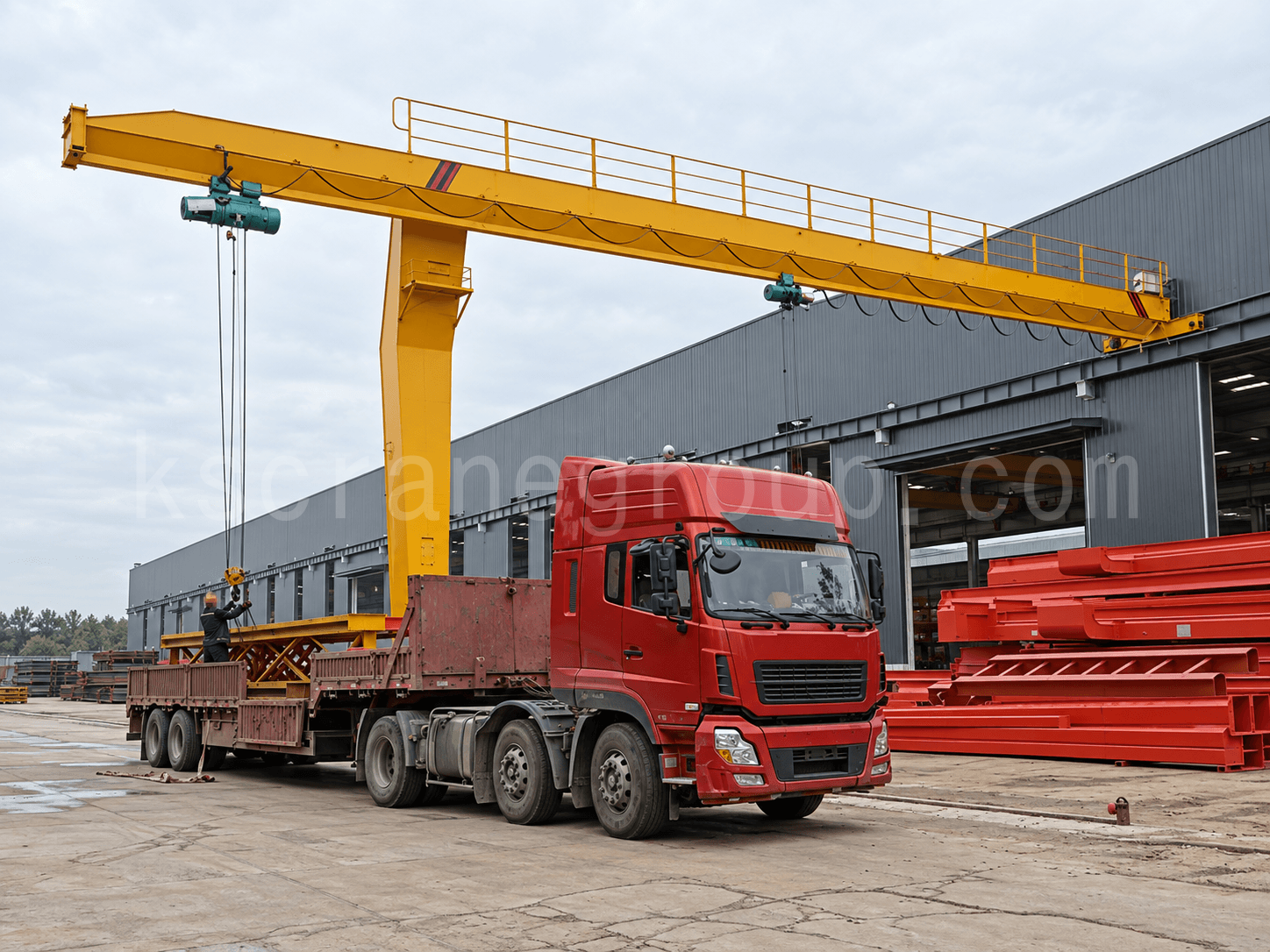
The semi-gantry crane can transfer steel, equipment, structural components, and other heavy goods directly between transport vehicles and workshops, warehouses, or storage yards. Its fixed rail coverage helps streamline loading and unloading operations while reducing repeated material transfers.The image shows an MB single-girder semi-gantry crane performing vehicle loading and unloading operations near the factory.

semi gantry crane vehicle loading and unloading

Optional Configurations for Semi-Gantry Cranes

  • Single-girder crane hoisting mechanism: A CD1, MD1, HC, or FEM standard electric hoist can be selected according to lifting requirements.
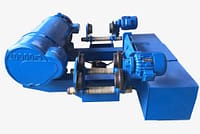
  • Double-girder crane hoisting mechanism: A hoist trolley or open winch trolley can be selected according to the load and operating conditions.
  • Dual hoisting configuration: Dual trolleys or dual electric hoists can be configured for different lifting tasks.
  • Safety monitoring system: FEM standard semi-gantry cranes can be equipped with a system that monitors operating status and safety information.

Semi-Gantry Crane Cases

Case Study: Single-Girder Semi-Gantry Crane for Lifting Glass Exported to Myanmar

myanmar semi gantry crane project case 1

The customer needed to handle fragile glass products in a space-constrained finished-product storage area, requiring smooth crane operation and accurate load placement. Because the work area lacked supporting columns, we supplied two Semi-Gantry Cranes and installed customized brackets connected to the existing columns, reducing the need for additional structural construction.

The cranes use dual-speed lifting and variable-frequency travel, allowing smooth and accurate low-speed placement while reducing shock and load sway. Travel limit switches, lifting limit switches, and overload protection with load display help reduce the risks of rail overtravel, excessive hook travel, and overloading. This solution combines site adaptability, precise handling, and safety protection, providing smoother and more controlled daily transfer of glass products.

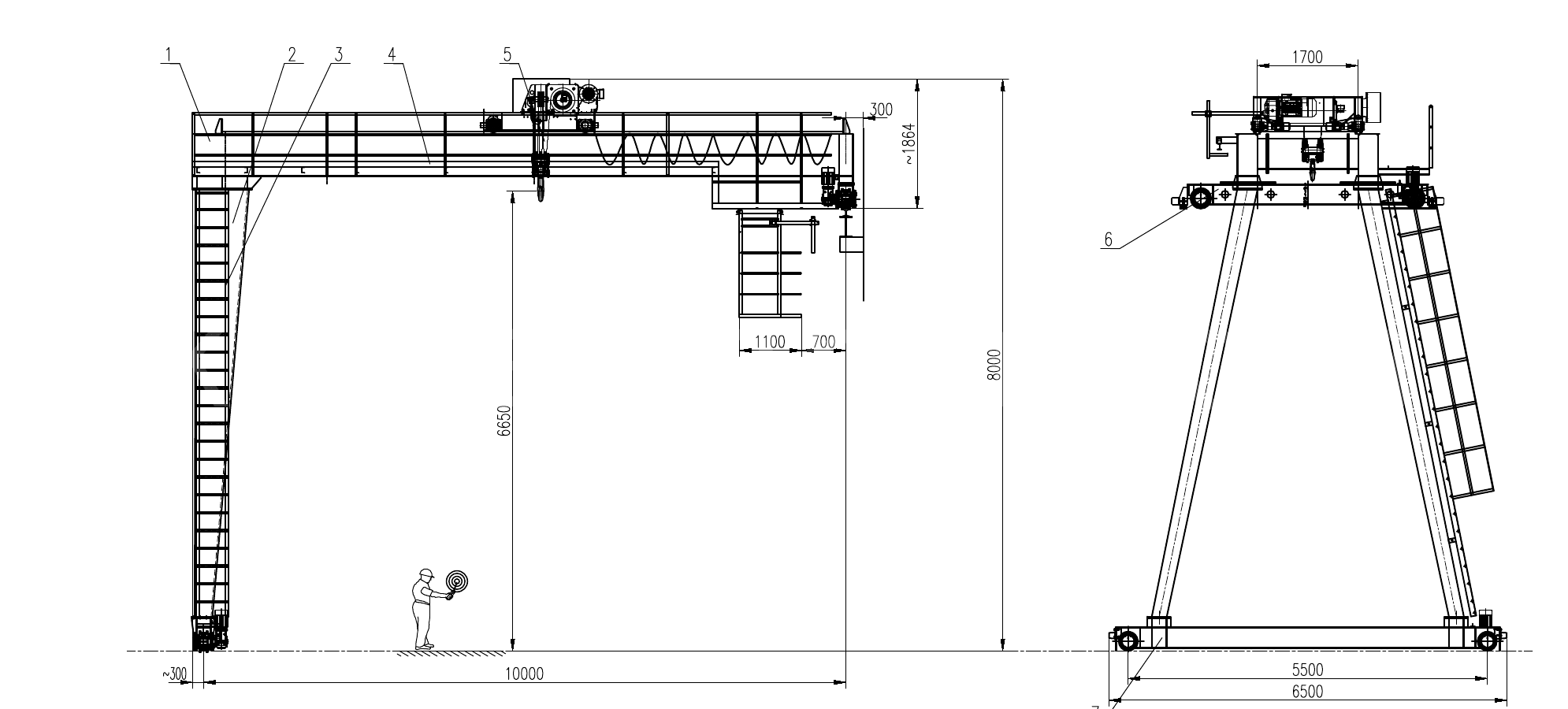
Case Study: 16t MGB Double-Girder Semi-Gantry Crane Exported to Israel

ParameterValue
Span10 m
Lifting Height6.65 m
Rated Lifting Capacity16 t
Lifting Speed5/1.2 m/min
Trolley Traveling Speed2-20 m/min
Crane Traveling Speed3-30 m/min
Crane Working ClassA5
Hoisting Motor Power16/2.6 kW
Crane Traveling Motor Power1.5 kW × 2
Power Supply3-phase AC, 380 V, 50 Hz
Wheel Diameter315 mm
Hoisting Mechanism Duty ClassM5
Trolley Traveling Motor Power0.96 kW × 2
The information above outlines the relevant specifications of the project to help you understand our cranes.

An Israeli client needed to lift and transfer 16-ton loads indoors, requiring equipment covering a 10-meter span and a 6.65-meter lifting height, adaptable to repetitive daily operations. Larger loads generate more significant inertia during start-up, stopping, and lowering; therefore, the project needed to meet not only the rated lifting capacity but also operational control and the mechanism’s working capacity.

Based on these requirements, we provided a 16-ton MGB double-girder semi-gantry crane, configured to A5 overall machine duty class and M5 lifting mechanism duty class, supporting the project’s required load and work cycles. The equipment features fast and slow lifting speeds and adjustable trolley and crane travel speeds, maintaining handling efficiency during normal transfers and reducing speed as it approaches the target location for more controllable start-up, operation, and lowering. 

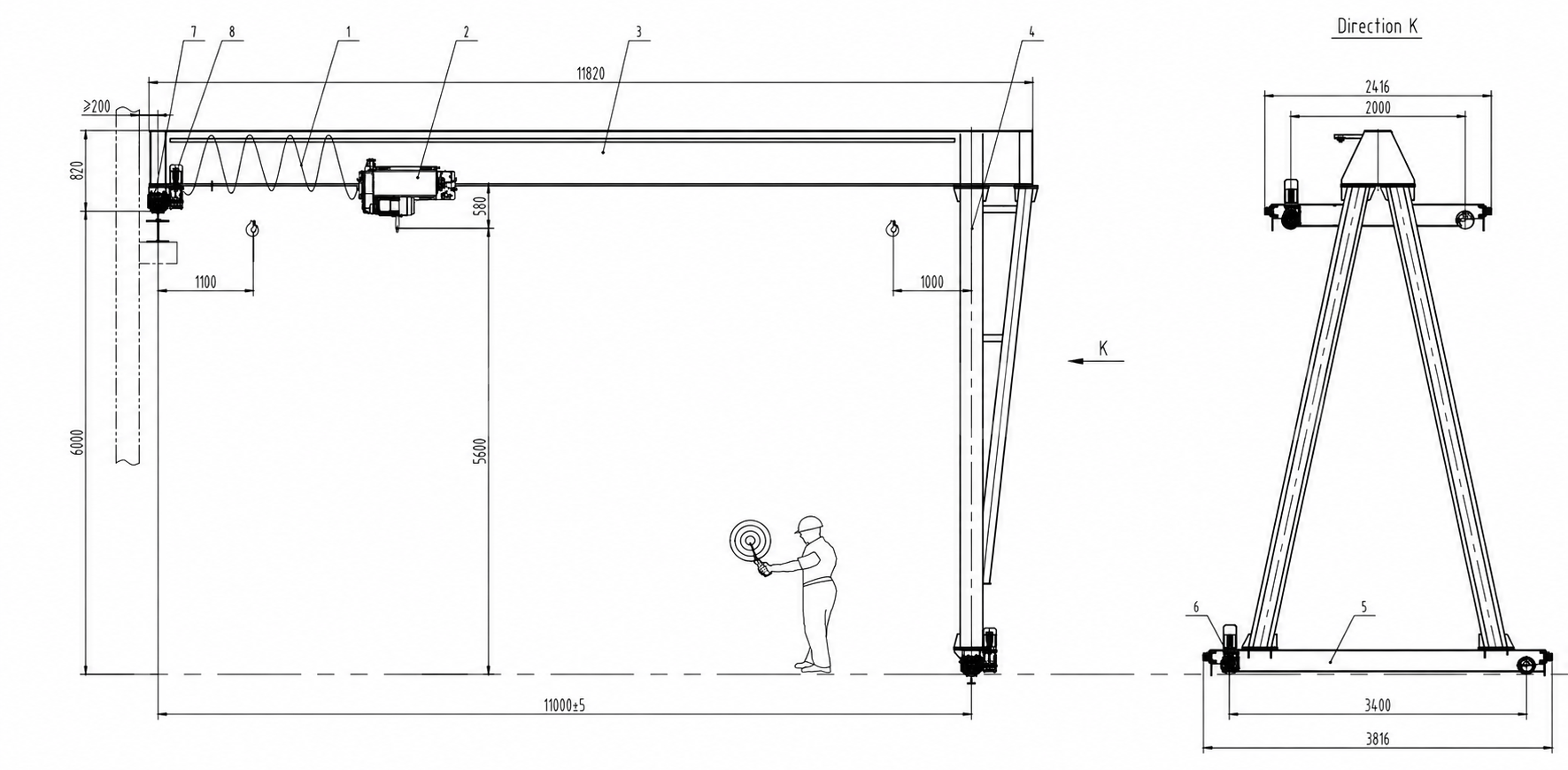
Case Study: 5t Single-Girder Semi-Gantry Crane Exported to Ecuador

ParameterValue
Span11m
Lifting Height5.6m
Rated Lifting Capacity5t
Lifting Speed0.8/5m/min
Trolley Travel Speed2-20m/min
Crane Travel Speed2-20m/min
Crane Duty ClassA5
Hoisting Motor Power4.9/0.8kW
Crane Travel Motor Power0.55kW × 2
Power Supply3-phase AC 380V, 50Hz
Wheel Diameter160mm
Rail ModelP24
Maximum Wheel Load38kN
The information above outlines the relevant specifications of the project to help you understand our cranes.

The customer in Ecuador required a crane to lift and transfer 5t loads inside the workshop, covering an 11m span and a 5.6m lifting height while supporting regular daily operation. To balance handling efficiency with placement control, the crane needed both dual-speed lifting and adjustable travel speeds.

We supplied a 5t single-girder semi-gantry crane with an A5 duty class. It provides lifting speeds of 0.8/5m/min, while both crane and trolley travel speeds are adjustable from 2 to 20m/min. Higher speeds improve normal transfer efficiency, while lower speeds provide smoother, more controlled starting, travel, and load placement.

FAQ

When Should You Choose a Semi-Gantry Crane?

A semi-gantry crane is suitable when a full gantry crane or overhead crane cannot meet the site requirements, or when the building cannot support an overhead crane runway on both sides. It is also a practical choice when more ground-level space must remain available for forklifts, workers, or other operations.

Can a Semi-Gantry Crane Operate Beneath an Overhead Crane?

A semi-gantry crane can be installed beneath a main overhead crane to create a two-level lifting system. The overhead crane handles materials across a larger area, while the semi-gantry crane serves a local production zone.
The vertical clearance, hook approach, and suspended-load height of both cranes must be checked to prevent their girders, hooks, or loads from entering each other's operating space. If both cranes may operate simultaneously, the combined loads imposed on the building columns, runway beams, and foundations must also be calculated.

What Is the Difference Between a Semi-Gantry Crane and a Gantry Crane?

A semi-gantry crane uses a ground-running support leg on one side and the building's elevated runway system on the other, reducing its impact on workshop passageways and equipment layouts. It is therefore well suited to existing workshops and localized handling areas.
A full gantry crane uses ground-running support legs on both sides, making it more suitable for outdoor sites, storage yards, or locations where an existing building runway structure cannot be used.

Get in Touch

  • Free and fast quote for the product.
  • Provide you our product catalog.
  • Your local crane projects from our company.
  • Become our agent and earn commission.
  • Any questions, contact us.

Contact Us

Click or drag files to this area to upload. You can upload up to 5 files.
English
Español Português do Brasil Русский Français Deutsch 日本語 한국어 العربية Italiano Nederlands Svenska Polski ไทย Türkçe हिन्दी Bahasa Indonesia Bahasa Melayu Tiếng Việt 简体中文 বাংলা فارسی Pilipino اردو Українська Čeština Беларуская мова Kiswahili Dansk Norsk Ελληνικά English