Overhead Crane Rail Installation Tolerances — 10 Acceptance Checks Based on ISO 12488-1:2012

Date: 29 Jun, 2026

An overhead crane runway rail is the most unforgiving component in the entire lifting system. A 5 mm span error across 20 metres creates a cyclic side load on the end carriages that no amount of wheel flange lubrication will fix. Whether you are a site supervisor verifying a civil contractor’s work, a crane installer preparing for erection, or a maintenance engineer performing a periodic inspection, these 10 tolerance checks are what the crane rail standard actually requires.

This guide is based on GB/T 10183.1-2018, which is identical to (IDT) ISO 12488-1:2012. The standard was last reviewed on 2025-07-01 with no updates. If your project specifies ISO tolerances, the values in this guide apply directly.

Which Standard Applies to Overhead Crane Rail Installation Tolerances

Crane TypeApplicable StandardTolerance Reference
Bridge cranes (general)GB/T 10183.1-2018Table 2, Grade 2
Bridge cranes (travel speed ≥ 112 m/min)GB/T 10183.1-2018Table 2, Grade 1
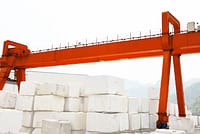
Gantry cranes (general)GB/T 10183.1-2018Table 2, Grade 2
Shipbuilding gantry cranesGB/T 10183.1-2018Table 2, Grade 2 + Table 6 (joint tolerances)
Single-girder / underslung cranesGB/T 10183.1-2018Per standard
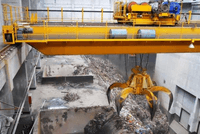
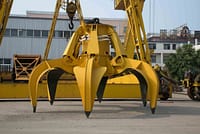
Grab ship unloadersGB/T 10183.1-2018Tables 2, 6, 7 — Grade 2
Jib cranesGB/T 10183.4-2010Separate tolerances
Crane Standard Comparison Table

The default for most bridge and gantry cranes: Grade 2 tolerances per Table 2.

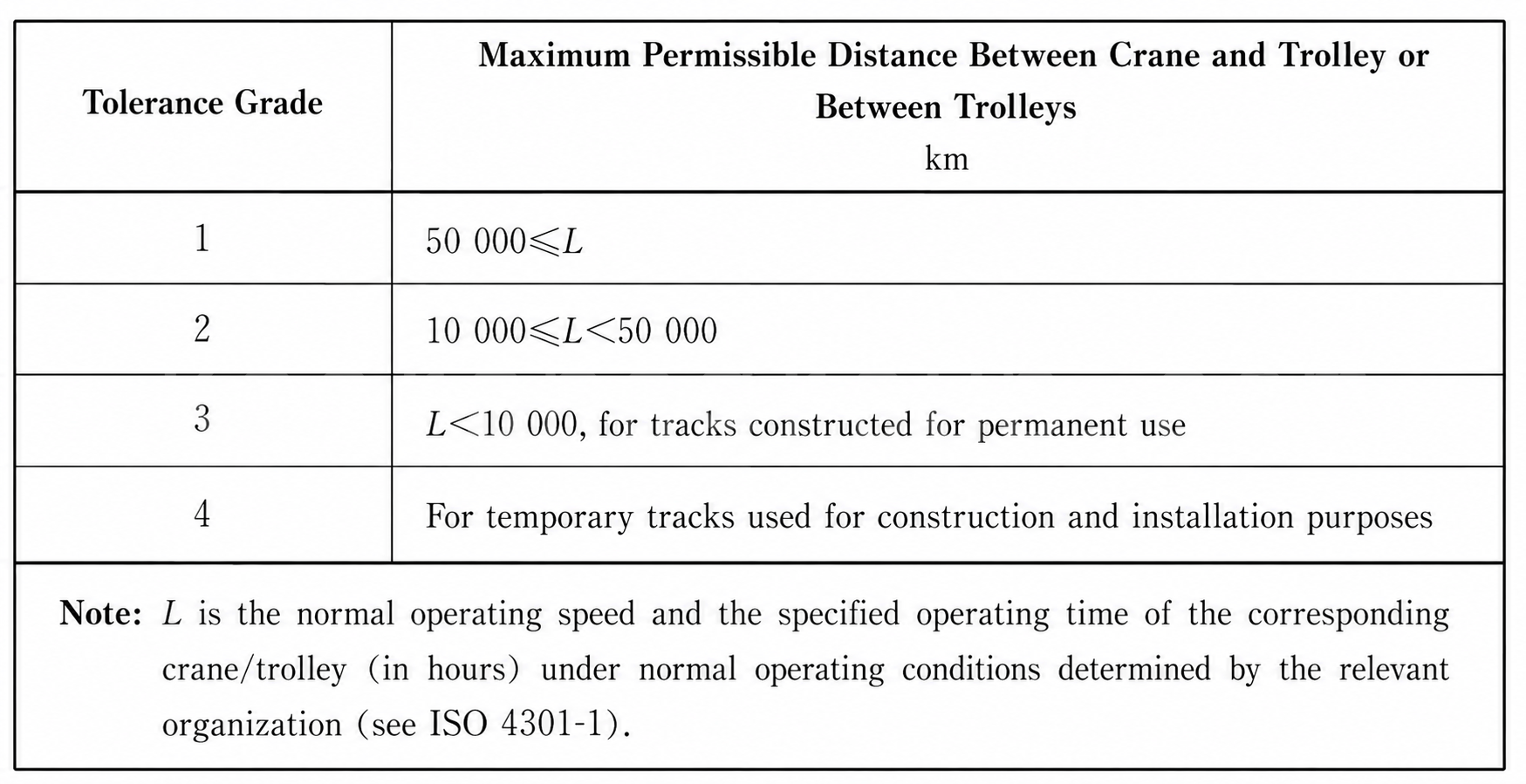
Overhead Crane Rail Installation Tolerances Grade Determination

Overhead crane rail installation tolerances grades are assigned primarily based on the total travel distance over the crane’s service life. However, system sensitivity — the degree to which the crane system reacts to loads generated by a tolerance deviation — may require upgrading by one grade. High-sensitivity systems include long-span cranes with minimal end-carriage wheelbase, or cranes handling precision-positioned loads.

Tolerance GradeTypical Application
Grade 1High-speed cranes (≥112 m/min), precision positioning, long service life
Grade 2Standard bridge and gantry cranes (most common)
Grade 3Low-speed, low-utilization cranes
Overhead Crane Rail Installation Tolerances Grade Application Table

The 10 Tolerance Checks (Grade 2)

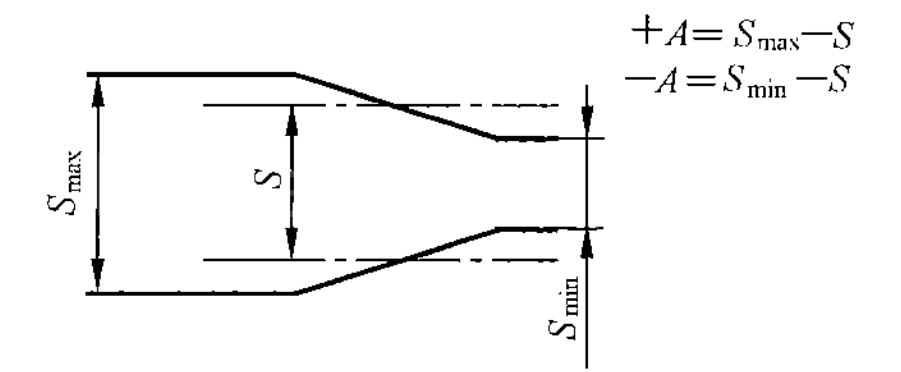
Check 1 — Span Tolerance ΔS

The distance between rail centres at any point along the runway.

Span (S)Grade 2 ToleranceGrade 1 Tolerance
S ≤ 16 mΔS = ±5 mmΔS = ±3 mm
S > 16 mΔS = ±[5 + 0.25 × (S − 16)] mm, max ±15 mmmax ±10 mm
Span Tolerance Comparison Table
2Overhead Crane Rail Installation Tolerances

Example: A 28 m span crane: ΔS = ±[5 + 0.25 × (28 − 16)] = ±[5 + 0.25 × 12] = ±8 mm.

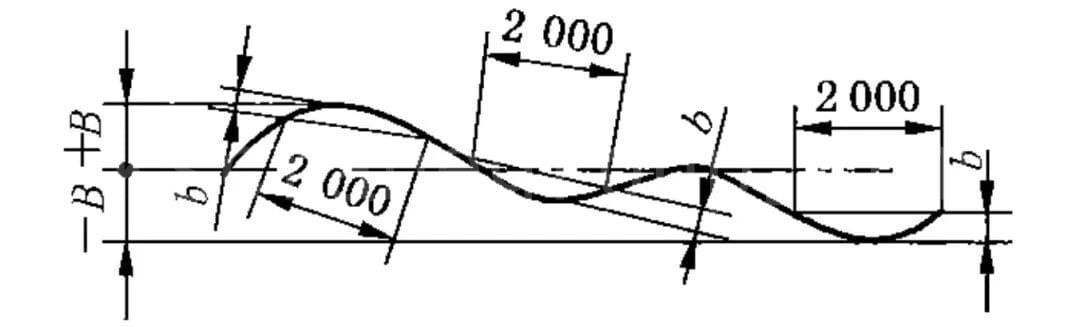
Check 2 — Rail Straightness in Horizontal Plane (Full Length) B

B = ±10 mm at any point along the full rail length.

This is the horizontal deviation of the rail head centreline from the theoretical centreline. Measure from a tensioned wire reference line at rail head height.

Check 3 — Rail Straightness in Horizontal Plane (2000 mm Sample) b

b = 1 mm over any 2000 mm sampling length.

This catches local kinks — the kind that cause a single wheel to suddenly scrub sideways. A 2000 mm straightedge and feeler gauge provides a sufficient field check.

3Overhead Crane Rail Installation Tolerances

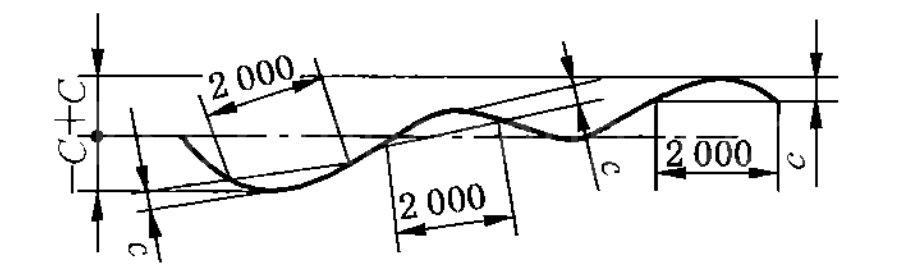
Check 4 — Rail Straightness in Vertical Plane (Full Length) C

C = ±10 mm at any point along the full rail length.

This is the vertical deviation of the rail head from the theoretical elevation line. Use a surveyor’s level or laser tracker for long runways.

Check 5 — Rail Straightness in Vertical Plane (2000 mm Sample) c

c = 2 mm over any 2000 mm sampling length.

Local dips or humps — the kind you feel when the crane rolls over a settled rail joint. A precision straightedge and depth gauge is sufficient for this check.

4Overhead Crane Rail Installation Tolerances

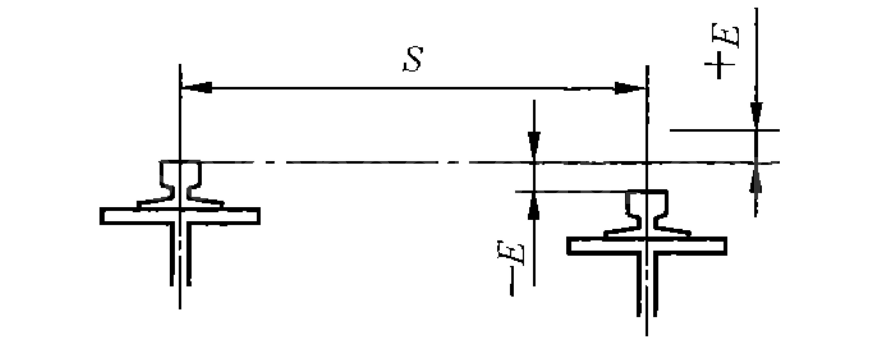
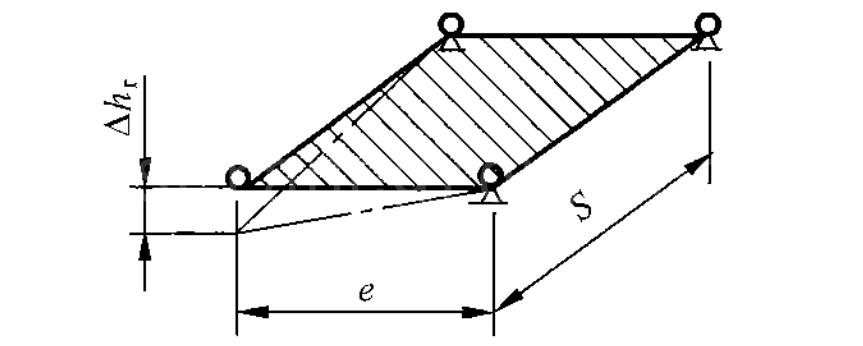
Check 6 — Height Difference Between Opposite Rails E

E = ±1.0 × S mm, where S is the span in metres, max ±10 mm. (Grade 1: E = ±0.5 × S mm, max ±5 mm.)**

5Overhead Crane Rail Installation Tolerances

Example: A 20 m span → E = ±1.0 × 20 = ±20 mm, capped at ±10 mm.

This is the cross-level measurement. A height difference between rails tilts the entire crane and creates a lateral force component from the lifted load. It is one of the most commonly overlooked checks.

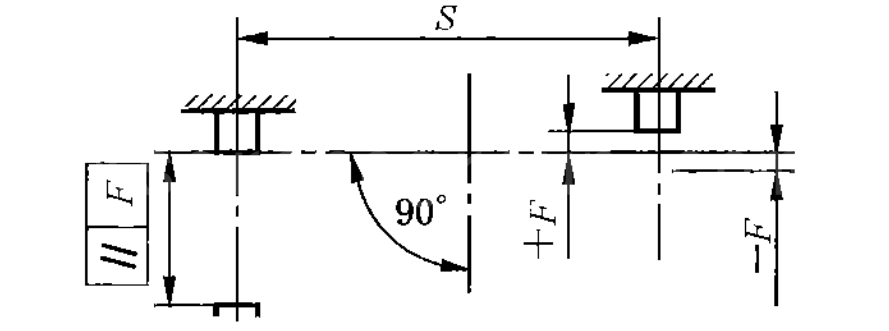
Check 7 — End Stop / Buffer Parallelism F

F = ±1.0 × S mm, where S is span in metres, max ±10 mm.

6Overhead Crane Rail Installation Tolerances

Both end stops must be parallel to each other and perpendicular to the rail longitudinal axis. If they are not, one side of the crane hits before the other, concentrating the impact force on one end carriage instead of sharing it across both.

Check 8 — Rail Joint Gap

The gap at rail joints must accommodate thermal expansion. For welded joints (preferred for long runways and shipbuilding gantry cranes), the joint must be ground flush after welding. Table 6 of GB/T 10183.1 provides specific joint construction tolerances.

Even 0.5 mm of vertical step at a rail joint will cause an audible impact and accelerate wheel wear.

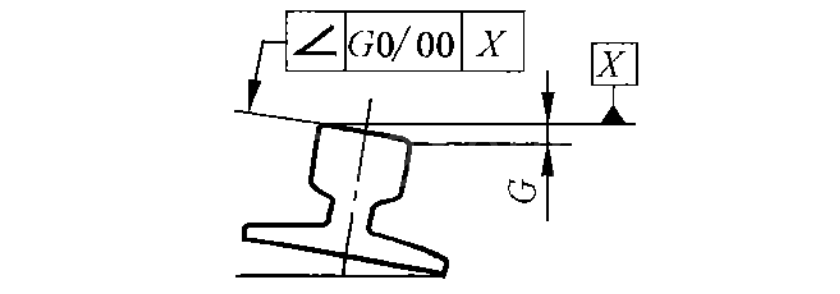
Check 9 — Rail Inclination G

G = 6‰ (6 per mille).

7Overhead Crane Rail Installation Tolerances

Some rail profiles (such as the QU series) have inclined running surfaces. The inclination tolerance must be verified against the wheel tread profile to ensure proper contact geometry.

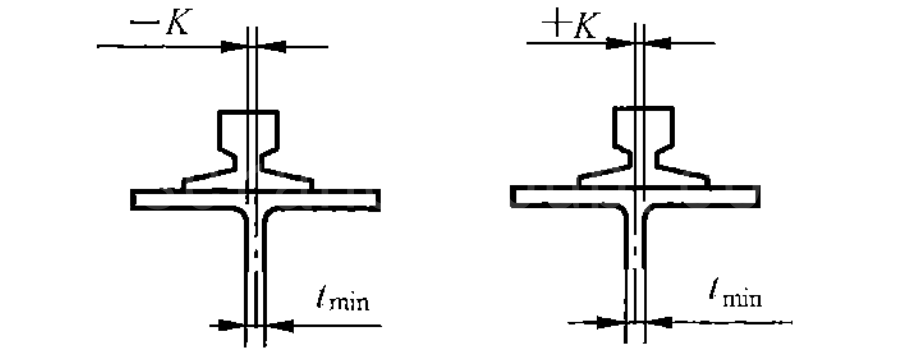
Check 10 — Rail Centre vs. Web Centre Deviation K

K = ±0.5 × tmin, where tmin is the minimum web thickness in mm.

8Overhead Crane Rail Installation Tolerances
9Overhead Crane Rail Installation Tolerances

On site for an overhead crane rail acceptance, follow this sequence:

  1. Span check first — If the span is out, everything else is academic. Use a calibrated laser distance meter at 2–3 metre intervals along the full runway.
  2. Cross-level (E) second — A rotating laser level or optical level. Mark one rail as reference elevation and measure the other relative to it.
  3. Horizontal straightness (B, b) — Tensioned piano wire at rail head height, measure offsets with a steel ruler.
  4. Vertical straightness (C, c) — Level instrument or laser tracker. For the 2000 mm local check, a precision straightedge is sufficient.
  5. Joint inspection — Every joint. Check for vertical step and gap.
  6. End stops (F) — Verify squareness to the rail axis. Both sides must contact simultaneously.
  7. Document everything — Photograph every measurement with the instrument reading visible. This is not bureaucracy; it is your defence when someone later claims the rail was installed correctly and the crane must be defective.

Consequences of Out-of-Tolerance Conditions

Out-of-Tolerance ConditionSymptomConsequence
Span too wide/narrowWheel flange continuously rubs one railAccelerated flange wear, increased travel resistance
Horizontal kink (b exceeded)Localized scrubbing, audible squealFlat spots on wheels, rail head spalling
Cross-level error (E exceeded)Crane drifts to low side when brakes are releasedUnequal wheel loads, skewing tendency
Joint step > 0.5 mmImpact noise at every joint passWheel bearing fatigue, structural vibration
Consequences of Out-of-Tolerance Conditions Comparison Table

Standards Referenced(Query of Chinese Crane Standards):

  • GB/T 10183.1-2018 — Cranes — Tolerances for wheels and travel tracks — Part 1: General (IDT ISO 12488-1:2012)
  • ISO 12488-1:2012 — Cranes — Tolerances for wheels and travel and traversing tracks — Part 1: General
  • GB/T 14405-2011 — General bridge cranes (specifies Grade 2 track tolerances)

  • GB/T 14406-2011 — General gantry cranes (specifies Grade 2 track tolerances)
  • GB/T 27997-2011 — Shipbuilding gantry cranes (Grade 2 + welded joints preferred)
  • GB/T 26475-2021 — Grab ship unloaders
Krystal
krystal
Crane OEM expert

With 8 years of experience in customizing lifting equipment, helped 10,000+ customers with their pre-sales questions and concerns, if you have any related needs, please feel free to contact me!

TAGS: Crane Maintenance,Crane Safety,GB/T 10183.1,ISO 12488-1,overhead crane,Rail Straightness,Rail Tolerance,Runway Inspection,Span Tolerance
English
Español Português do Brasil Русский Français Deutsch 日本語 한국어 العربية Italiano Nederlands Svenska Polski ไทย Türkçe हिन्दी Bahasa Indonesia Bahasa Melayu Tiếng Việt 简体中文 বাংলা فارسی Pilipino اردو Українська Čeština Беларуская мова Kiswahili Dansk Norsk Ελληνικά English