Smart Crane Automation Levels: The Definitive Guide to GB/T 45163 Six-Level Intelligent Classification
Date: 10 Jul, 2026

As cranes become increasingly automated, the industry has lacked a universal framework to define and evaluate just how “smart” a crane actually is. GB/T 45163.1-2024 — the first standard of its kind worldwide — fills this gap by establishing a formal six-level crane intelligent classification system. Published in December 2024 and effective July 2025, it defines the vocabulary, grading principles, and technical requirements for crane intelligent systems from Level 0 (no intelligence) through Level 5 (full autonomy). This guide breaks down each smart crane automation level, the four evaluation factors, and the five hoisting movement dimensions that underpin the classification.

1. Scope and Key Definitions

The standard applies to the intelligent systems of cranes defined in GB/T 20776-2023 Lifting Appliances — Classification, with other lifting appliances as a reference.

TermDefinition
Crane intelligentizationThe integration of computer networks, big data, IoT, and artificial intelligence technologies into a crane, forming a coordinated human-machine-environment system that fulfils hoisting operation requirements through perception, decision-making, execution, and other comprehensive capabilities.
Crane intelligent systemA system consisting of hardware and software that enables intelligent operation of the crane. (Note: the system is part of the crane that performs the hoisting work.)
Remote operationControl of the crane by a driver physically separated from the crane body, using video, visual interfaces, and other human-machine interaction methods.
Remote operation stationA control station that enables remote operation.
Unmanned operationThe crane relies on the intelligent system to execute hoisting operations without human participation.

2. Crane Intelligent Classification — Grading Principles

The six smart crane automation levels are determined by the extent to which the intelligent system can execute hoisting tasks. The classification is based on two dimensions:

Dimension 1: Four Evaluation Factors

  • Perception capability — can the system sense its environment and operating state?
  • Decision-making capability — can the system determine what action to take?
  • Execution capability — can the system physically carry out the determined action?
  • Other comprehensive capabilities — any additional intelligent functions beyond the three above.

Dimension 2: Five Hoisting Movement Scopes

  • One-dimensional hoisting — movement along a single axis (X, Y, Z, or R)
  • Two-dimensional hoisting — coordinated movement along two axes
  • Three-dimensional hoisting — coordinated movement along three axes
  • All-dimension hoisting — full spatial movement within the design operating conditions
  • Any-condition all-dimension hoisting — full spatial movement under any operable lifting conditions (open environment)

Movement directions are defined in a 3D coordinate system: X (left/right), Y (forward/backward), Z (up/down). For cranes with a slewing mechanism, the slewing axis is designated R (clockwise/counter-clockwise).

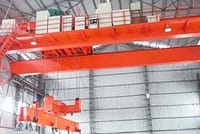
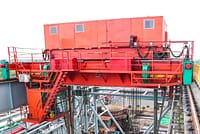
2Figure 2 heavy crane remote intelligent control system
Heavy crane remote intelligent control system

3. The Six-Level Intelligent Classification System

Level 0 — No Intelligence

The intelligent system has no perception, decision-making, execution, or other comprehensive capabilities for hoisting tasks. It provides only basic mandatory protection functions. The driver has full control of all crane operations.

Notes:

  1. A Level 0 system may still read crane operating parameters, provide basic protection, and deliver alerts or brief control interventions (e.g. automatic alarms, automatic progress control).
  2. Emergency stop and automatic braking are excluded from the intelligent system evaluation scope — these are mandatory safety provisions.
  3. The protection requirements specified in GB/T 6067.1, GB/T 3811, GB/T 5226.32 and other standards constitute the mandatory baseline and are not part of the intelligence grading.

Level 1 — Assisted Intelligence

The intelligent system:

  • Has no other comprehensive capability
  • Has partial perception, decision-making, and execution capabilities
  • Can execute one-dimensional hoisting movement commands within its design operating conditions

The driver performs all remaining operational tasks and supervises the intelligent system. The driver intervenes in crane control or deactivates the system when necessary.

Design operating condition: the totality of conditions established during the design of the crane intelligent system that apply to its functional operation — including the design operating range, crane state, driver, and other prerequisites.

Level 2 — Partial Intelligence

The intelligent system:

  • Has partial perception, decision-making, execution, and other comprehensive capabilities
  • Can execute two-dimensional hoisting movement commands within its design operating conditions

The driver performs all remaining operational tasks and supervises the intelligent system, intervening when needed.

Level 3 — Conditional Intelligence

The intelligent system:

  • Has partial perception, decision-making, execution, and other comprehensive capabilities
  • Can execute three-dimensional hoisting movement commands within its design operating conditions

The driver performs all remaining operational tasks and supervises the intelligent system, intervening when needed.

Level 4 — High Intelligence

The intelligent system:

  • Has full perception, decision-making, execution, and other comprehensive capabilities
  • Can execute all-dimension hoisting task commands within its design operating conditions
  • Is capable of automatically executing a minimum-risk strategy

An on-duty attendant does not participate in executing hoisting tasks — they only supervise the intelligent system, intervening in crane control or deactivating the system when necessary.

Level 5 — Full Intelligence

The intelligent system:

  • Has full perception, decision-making, execution, and other comprehensive capabilities
  • Can execute all-dimension hoisting task commands under any operable conditions (e.g. open lifting environments)
  • Is capable of automatically executing a minimum-risk strategy
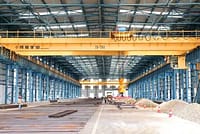
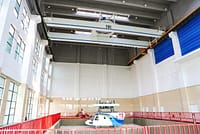
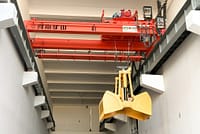
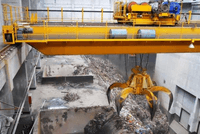
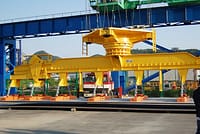
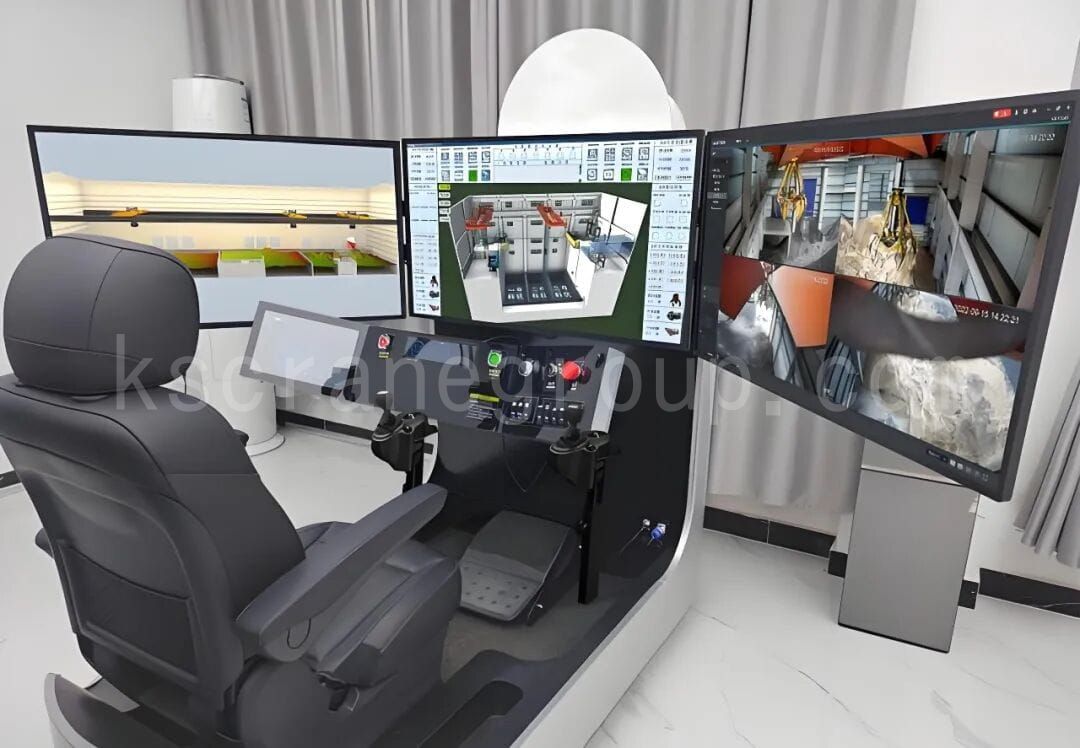
3Figure 3 Intelligent unmanned grab crane monitoring and remote operation station
Intelligent unmanned grab crane monitoring and remote operation station

The on-duty attendant only supervises the intelligent system. They intervene in crane control or deactivate the system only upon an emergency intervention request issued by the intelligent system.

Note: A Level 5 intelligent system has no design operating range restrictions for lifting environments and loads that the crane is capable of handling (commercial, legal, and communication restrictions excepted).

Classification Summary

LevelDesignationCapabilitiesMovement ScopeOperating ConditionsHuman Role
0No IntelligenceNone (basic protection only)Driver fully controls
1Assisted IntelligencePartial (no comprehensive)1DDesign conditionsDriver operates + supervises
2Partial IntelligencePartial2DDesign conditionsDriver operates + supervises
3Conditional IntelligencePartial3DDesign conditionsDriver operates + supervises
4High IntelligenceFullAll dimensionsDesign conditionsAttendant supervises only
5Full IntelligenceFullAll dimensionsAny operable conditionAttendant — emergency only

4. The Broader GB/T 45163 Series

GB/T 45163.1-2024 is the first of a planned six-part series:

PartScope
Part 1Vocabulary and classification (published)
Part 2Positioning technology
Part 3Anti-sway technology
Part 4Obstacle avoidance technology
Part 5Recognition technology (environment, load, attitude)
Part 6Communication technology (methods, interfaces, protocols)

The standard also provides two informative annexes: Annex A — relationship between crane intelligent levels and grading principles, and Annex B — roles of the crane user and the crane intelligent system.

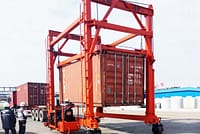
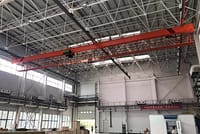
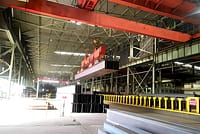
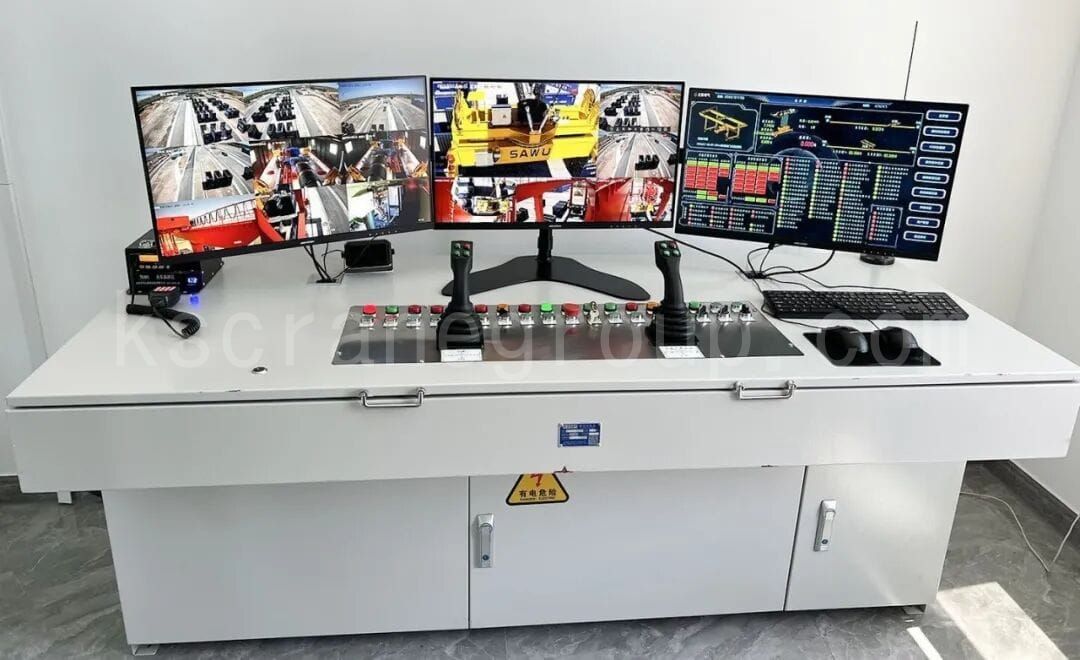
Figure 4 Rail mounted container gantry crane remote operation station at Wanli New Energy Smart Land Port
Rail-mounted container gantry crane remote operation station at Wanli New Energy Smart Land Port

Reference Standards(Query of Chinese Crane Standards):

  • GB/T 45163.1-2024 Lifting appliances — Intelligent systems — Part 1: Vocabulary and classification
  • GB/T 20776-2023 Lifting appliances — Classification
  • GB/T 6067.1-2010 Safety rules for lifting appliances — Part 1: General
  • GB/T 3811-2008 Design rules for cranes
  • GB/T 5226.32-2017 Electrical safety of machinery — Electrical equipment of machines — Part 32: Requirements for hoisting machines
Krystal
krystal
Crane OEM expert

With 8 years of experience in customizing lifting equipment, helped 10,000+ customers with their pre-sales questions and concerns, if you have any related needs, please feel free to contact me!

TAGS: Artificial Intelligence,Crane Automation,Crane Safety,GB/T 45163,Industrial IoT,Intelligent Classification,Lifting Equipment,Remote Operation,Smart Crane,Unmanned Crane
English
Español Português do Brasil Русский Français Deutsch 日本語 한국어 العربية Italiano Nederlands Svenska Polski ไทย Türkçe हिन्दी Bahasa Indonesia Bahasa Melayu Tiếng Việt 简体中文 বাংলা فارسی Pilipino اردو Українська Čeština Беларуская мова Kiswahili Dansk Norsk Ελληνικά English